A Quick Roundup of Inauguration-Day Immigration Activity
- External Source
admin
- 0
- 9 minutes read
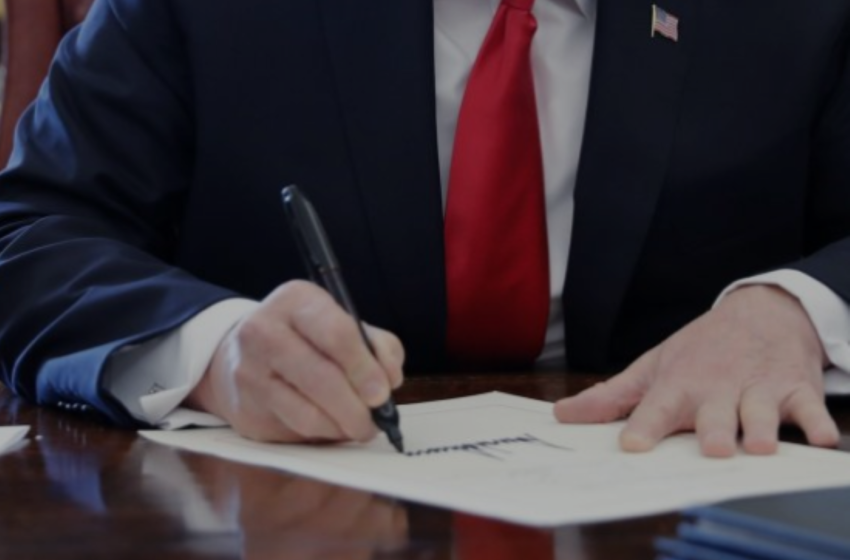

January 20, 2025, will likely go down as the most momentous day in immigration history, as the White House, Congress, and administrative state all got busy making major moves. Each action merits more in-depth analysis, but here is a quick round-up of a few things that happened, excluding tens of executive orders and proclamations that each require separate discussion.
Senate Passage of the Laken Riley Act. The U.S. Senate passed S. 5, the Laken Riley Act, with a vote of 64 yeas to 35 nays, sending the bill to the House, which has already passed its own version of the legislation (H.R. 29) by an overwhelming margin.
As I have explained, the bill would require DHS to detain illegal aliens who’ve been convicted of, arrested for, charged with, or who have admitted to committing “any burglary, theft, larceny, or shoplifting offense” as those terms are defined in the jurisdiction where those acts are committed.
As importantly, it would allow states to sue the federal government for injunctive relief related to failures by DHS to detain aliens subject to detention under the Immigration and Nationality Act (INA) if the “failure caused the state or its residents harm, including financial harm of more than $100”.
That essentially deputizes state attorneys general to sue to ensure DHS complies with Congress’s alien detention mandates, and it also reverses Supreme Court precedent that left states defenseless to oppose the most egregious Biden administration alien-criminal releases.
Confirmation of Marco Rubio as Secretary of State. The Senate unanimously confirmed former Florida Sen. Marco Rubio (R) to be the new U.S. secretary of State.
Rubio, who evolved from a proponent of the so-called “Gang of Eight” amnesty bill (which he later claimed was never intended to become law) to become one of President Trump’s key immigration allies during his first term, will now be charged with securing deals with our regional neighbors to stem migrant incursions to the United States.
Rubio — the son of Cuban immigrants — has long played an outsized role in GOP circles when it comes to Latin America. For example, in January 2019, the New York Times reported:
Through sheer force of will and a concerted effort to engage and educate President Trump, Mr. Rubio has made himself, in effect, a virtual secretary of state for Latin America, driving administration strategy and articulating it to the region from the Senate floor, as he did the other day, and every television camera he can find. Perhaps no other individual outside Venezuela has been more critical in challenging President Nicolás Maduro.
Socialist strongman Maduro still holds power in Caracas, and more than 760,000 inadmissible Venezuelan nationals have poured into the United States since September 2021. As the top U.S. diplomat, Rubio will now be charged with reversing that trend, forcing countries to accept the return of their deported nationals, and tackling the so-called “root causes” of illegal immigration to the United States.
The End of CHNV Parole. Speaking of Venezuela, the incoming Trump administration almost immediately shut down a Biden-Harris parole program for nationals of that country as well as of Cuba, Haiti, and Nicaragua known as “CHNV Parole”.
(This comes on the heels of the incoming administration’s ending of paroles of migrants who used the CBP One app at the land border wiuth Mexico, which I discussed on January 20.)
According to CBP, through the end of December approximately 531,690 Cubans, Haitians, Nicaraguans, and Venezuelans arrived by air and were granted two-year periods of parole under the program, despite the fact that Congress never authorized it.
As I have explained in the past, CHNV parole is uniquely vulnerable to trafficking and exploitation, and in fact DHS paused the program last summer amidst fraud concerns.
Dealing with the hundreds of thousands of beneficiaries of the program here is the responsibility of ICE and Trump’s “border czar” Tom Homan, but the good news for them is that the application web page for CHNV parole is now blank, with the words “Page Not Found” greeting the curious.
Firing of EOIR Leadership. The Executive Office for Immigration Review (EOIR) is the DOJ component that oversees the immigration courts and the appellate Board of Immigration Appeals (BIA).
On Monday, the incoming administration almost immediately axed EOIR’s leadership, firing the office’s acting director, chief immigration judge, policy chief, and general counsel.
The moves were somewhat unexpected, but EOIR likely landed on Trump’s radar after a late October House Judiciary Committee report revealed that “more than 700,000 illegal aliens … had their cases dismissed, terminated, or administratively closed, allowing those aliens to stay in the country indefinitely without facing immigration consequences”.
As I explained after that report was released, those dismissals, terminations, and closures were nearly all issued at the behest of Kerry Doyle, the Biden-Harris administration’s ICE principal legal advisor and de factor general counsel.
An April 2022 memo from Doyle directed her then-attorneys (who represent the interests of the United States daily in immigration court) to review their dockets under the administration’s non-enforcement “guidelines” and to get rid of those cases at the behest of aliens who believed they weren’t Biden-Harris “enforcement priorities”.
There’s not a lot of visibility into how EOIR implemented those ICE policies, but having been an immigration judge myself I likely wouldn’t have been happy investing time to adjudicate cases involving facially removable aliens only to have them tanked.
More will likely be disclosed about the goings on over the past four years at EOIR’s Falls Church, Va., headquarters, but for now, EOIR’s website only lists one individual, long-time EOIR and ICE career official Sirce E. Owen (the new acting director), in its leadership ranks.
Likely Just Getting Started. The new Trump administration is likely just getting started in reforming immigration policy, personnel, and enforcement to fit its own agenda and eliminate the unpopular strategies of the past four years, but if Day 1 is any sign, hold onto your hats, because things are going to change — as the incumbent says — “bigly”.


