Trump Issues ‘Invasion’ Proclamation, Restricting Asylum Claims
- External Source
admin
- 0
- 16 minutes read

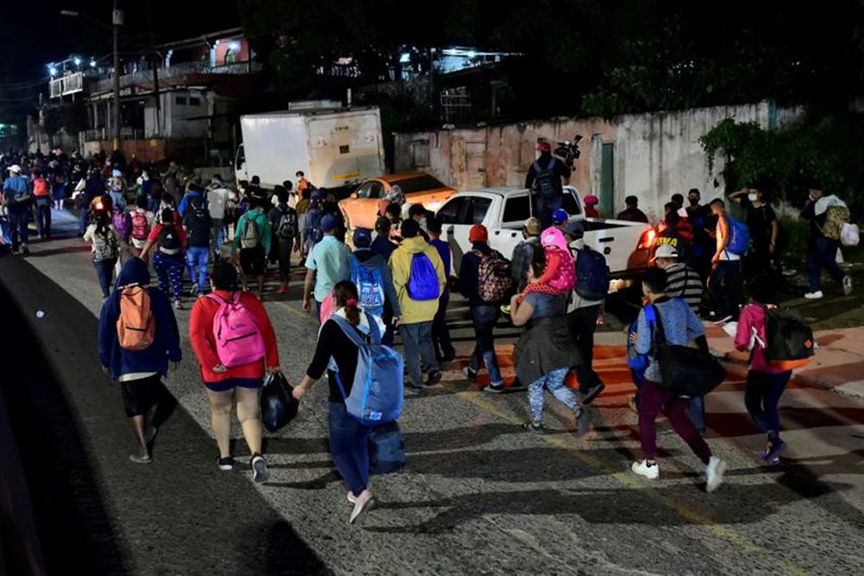
Among the raft of orders published on his (second) first day in office, President Trump issued a presidential proclamation (PP) captioned “Guaranteeing the States Protection Against Invasion”, in which he declared an “invasion” at the Southwest border and restricted asylum claims by aliens who have entered illegally. Cue complaints by immigrants’ advocates that will almost definitely be followed by litigation.
“Invasion”. Throughout the migrant crisis at the Southwest border under the Biden-Harris administration, various states complained that they were in the midst of an “invasion” as referenced in Article I, § 10, Clause 3 of the U.S. Constitution, with unvetted aliens and drug smugglers pouring into their jurisdictions.
That clause states, in pertinent part: “No State shall, without the Consent of Congress … engage in War, unless actually invaded, or in such imminent Danger as will not admit of delay”.
In November 2022, for example, Texas Gov. Greg Abbott (R), referenced the so-called “invasion clause” while ordering the state’s military and law-enforcement assets “to use all resources and tools available to repel immigrants from attempting to cross illegally, arrest those who cross illegally and return them to the border, and arrest criminals who violate Texas law”.
That followed an August 2022 poll conducted by Ipsos for NPR, in which 54 percent of respondents agreed with the proposition: “The U.S. is experiencing an invasion at the southern border”.
Interestingly, when NPR issued that poll, it did so accompanied by an article quoting various immigrant advocates who linked the term “invasion” with xenophobia (and worse). Regardless, Abbott continued to use it in connection with the Southwest border, writing in a February 2024 op-ed in the New York Post:
The criminal smuggling activity faced by Texas far exceeds Madison’s criteria for use of a state militia. Texas, and the 25 states whose Governors support our efforts, is utilizing Article I, Section 10, Clause 3 of the Constitution to defend against imminent dangers or invasions. That constitutional provision is the supreme law of the land and would supersede any federal statutes to the contrary, if Congress ever passed one.
Criminal Organizations and Aliens With Communicable Diseases
Abbott and Trump are close and regularly appeared in campaign appearances together, so it doesn’t come as much of a surprise that the new president took up Abbott’s invasion call as soon as he returned to office.
The Trump PP references a number of different threats emanating from the Southwest border, including “the presence of, and control of territory by, international cartels and other transnational criminal organizations on the other side of the” U.S.-Mexico line as well as the presence of “innumerable aliens potentially carrying communicable diseases of public health significance” who are illegally crossing that border and entering “communities across the United States”.
Notably, both alien drug smugglers and foreign nationals with “communicable diseases of public health significance” are already barred from admission, the former under section 212(a)(2) of the Immigration and Nationality Act (INA) and the latter under section 212(a)(1) of the act.
Those provisions are only really effective, however, in the legal immigration context, when foreign nationals apply for visas at U.S. consulates abroad and bring those visas with them when entering through lawful ports of entry. They are essentially dead letters when aliens cross the border illegally.
With respect to illegal criminal migrants, the PP explains:
Due to significant information gaps — particularly in the border environment — and processing times, Federal officials do not have the ability to verify with certainty the criminal record or national-security risks associated with the illegal entry of every alien at the southern border, as required by section 212(a)(2)-(3) of the INA. … Nor do aliens who illegally cross the southern border readily provide comprehensive background information from their home countries to Federal law enforcement officials.
That latter statement is a nice way of saying that terrorists and aliens with criminal records aren’t always forthcoming about their prior misdeeds and present intentions, which itself is a nice way of saying that bad people usually lie and claim that they are choirboys.
And when it comes to aliens with communicable diseases, as the PP makes clear:
Effectively no aliens who illegally enter the United States provide Federal officials at the southern border with their comprehensive health information, as a lawful immigrant would. As a result, innumerable aliens potentially carrying communicable diseases of public health significance illegally cross the southern border and enter communities across the United States.
Immigrants seeking to enter legally usually must be checked out by a physician before they come. Often, those immigrants know that they have some sort of illness or disease already, but you’d be surprised at how many believe themselves to be in the bloom of health only to be told otherwise in that process.
Focusing on and combining those alien criminals and terrorists and migrants with communicable diseases, the PP states:
This ongoing influx of illegal aliens across the southern border of the United States has placed significant costs and constraints upon the States, which have collectively spent billions of dollars in providing medical care and related human services, and have spent considerable amounts on increased law enforcement costs associated with the presence of these illegal aliens within their boundaries.
Trump Declares an “Invasion” to Fulfill His “Obligation to the States”
Abbott’s biggest beef with the Biden-Harris border policies was that securing the border is the federal government’s job, and it was failing to even try to do it.
That’s a problem, because when Texas was admitted as a state, it effectively surrendered its right to protect itself from foreign threats coming from across its 1,254-mile border with Mexico, leaving Austin dependent on the vagaries of immigration policies issued in Washington, D.C.
Only the aforementioned “invasion” clause gave the Lone Star state any authority to deter illegal migrants and criminals. Which is why Abbott repeatedly invoked it, despite the fact that it is poorly defined both in the Constitution and in subsequent interpretations thereof.
Trump in the PP recognizes this constitutional conundrum and concurs with Abbott’s assessment, stating:
In joining the Union, the States agreed to surrender much of their sovereignty and join the Union in exchange for the Federal Government’s promise in Article IV, Section 4 of the U.S. Constitution, to “protect each of [the States] against Invasion.” I have determined that the current state of the southern border reveals that the Federal Government has failed in fulfilling this obligation to the States and hereby declare that an invasion is ongoing at the southern border, which requires the Federal Government to take measures to fulfill its obligation to the States.
“Certain Emergency Tools”
Saying that the border is experiencing an invasion and actually securing the border against one are, of course, two different things. Which is why Trump vows in his proclamation to pull out all the stops to stem the illegal migrant flow.
One of the tools Trump is bringing to this effort is section 212(f) of the INA, “Suspension of entry or imposition of restrictions by President”, a provision of the act I have written about extensively. It states, in pertinent part:
Whenever the President finds that the entry of any aliens or of any class of aliens into the United States would be detrimental to the interests of the United States, he may by proclamation, and for such period as he shall deem necessary, suspend the entry of all aliens or any class of aliens as immigrants or nonimmigrants, or impose on the entry of aliens any restrictions he may deem to be appropriate. {emphasis added.]
The PP references that language, and notes that the Supreme Court has held it “exudes deference to the President in every clause”. Justices rarely gush over the breadth of a subsection in the federal code, which is a key sign 212(f) is something special.
The proclamation references another provision in the INA, section 215(a)(1), which is likely one of the least appreciated provisions in the act. It states:
Unless otherwise ordered by the President, it shall be unlawful — (1) for any alien to depart from or enter or attempt to depart from or enter the United States except under such reasonable rules, regulations, and orders, and subject to such limitations and exceptions as the President may prescribe.
In essence, every immigration regulation is premised on section 215(a)(1), which renders it as key to border enforcement as capital is to a business enterprise. But, because crafting implementing rules is a given in administrative law, it’s usually overlooked unless expressly referenced.
Which, of course the PP does, noting:
this authority necessarily includes the right to deny the physical entry of aliens into the United States and impose restrictions on access to portions of the immigration system, particularly when the number of aliens illegally crossing the southern border prevents the Federal Government from obtaining operational control of the border.
Together, the proclamation refers to sections 212(f) and 215(a)(1) as “emergency tools”, and it uses them to suspend the entry of illegal migrants into the United States until the president issues “a finding that the invasion at the southern border has ceased”.
Restricting Access to Asylum
There is a big difference, of course, between barring the physical entry of illegal migrants into the United States and actually preventing them from crossing the border improperly.
Border Patrol agents face a serious challenge in apprehending thousands of illicit entrants daily, but it is a job that they can generally do fairly effectively when the numbers remain at a reasonable level.
The migrant crisis over the past four years hasn’t simply been a function of the capacity of agents to nab illegal entrants, though. More importantly, it’s due to those aliens’ ability to delay their removals by requesting asylum once they were caught.
Section 208(a)(1) of the INA states:
Any alien who is physically present in the United States or who arrives in the United States (whether or not at a designated port of arrival and including an alien who is brought to the United States after having been interdicted in international or United States waters), irrespective of such alien’s status, may apply for asylum in accordance with this section or, where applicable, [section 235(b) of the INA; emphasis added].
When Congress wrote section 208(a)(1) of the INA in 1980, and even when it added that last clause referencing the “expedited removal” and “credible fear” provisions in section 235(b)(1) of the INA in 1996, it was not that big of a deal, because most illegal entrants were single adult males from Mexico and few of them made asylum claims.
Those provisions took on oversized importance starting around FY 2014, when increasing numbers of non-Mexican migrants began crossing illegally and requesting asylum.
The Biden-Harris administration assumed every illegal entrant was an “asylum seeker” and as a result released most of them (even though it lacked the authority to do so), which encouraged even more to come, despite the fact that even the Supreme Court has admitted that:
Every year, hundreds of thousands of aliens are apprehended at or near the border attempting to enter this country illegally. Many ask for asylum, claiming that they would be persecuted if returned to their home countries. … Most asylum claims, however, ultimately fail, and some are fraudulent.
To curb such abuses, and put teeth into his order barring illegal migrants from entering illegally, Trump’s proclamation “restricts” the ability of those aliens to apply for asylum, or more precisely, restricts them “from invoking provisions of the INA that would permit their continued presence in the United States, including, but not limited to, section 208 of the INA”.
Trump issued a similar proclamation in November 2018, which DHS and the Department of Justice (DOJ, which has jurisdiction over the immigration courts), quickly followed with a regulation that barred illegal entrants from applying for asylum.
Those regulations were quickly bottled up in the courts, but the Ninth Circuit didn’t issue a final decision blocking the DHS/DOJ asylum rules until March 2021 — well after Trump left office and could seek Supreme Court review.
Six judges of the Ninth Circuit dissented from that March 2021 en banc decision, which suggests that arguments supporting the rule’s validity were not entirely baseless. In any event, don’t be surprised if DHS and DOJ publish a regulation implementing the latest PP in short order.
“Invasion” has been a loaded term when used to describe the illegal entries of millions of migrants at the Southwest border over the past four years. Nevertheless, most Americans believe it’s apt and the new president hasn’t shied away from using it in his latest proclamation barring improper entries at the Southwest border. Stay tuned, because Trump’s efforts to secure the border are just heating up.


