To Measure Border Security, Keep an Eye on the Fentanyl Numbers
- External Source
admin
- 0
- 11 minutes read

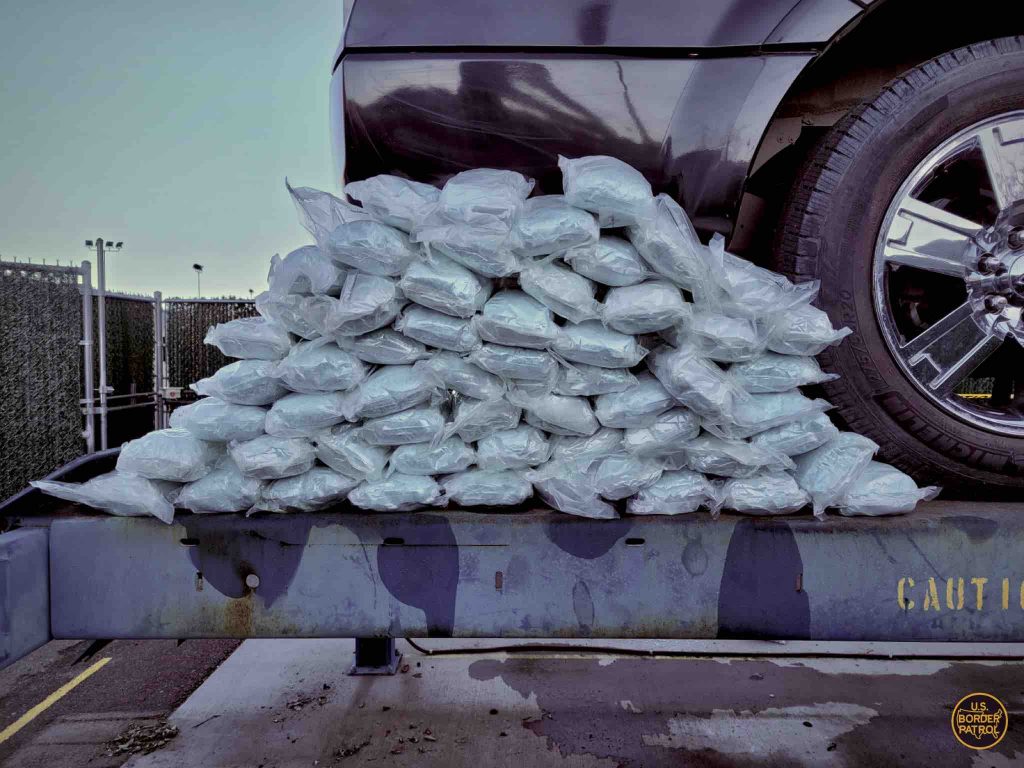
I recently examined a decline in CBP migrant encounters in January, which the Trump White House is highlighting as proof of the success of its border policies. Not to be overlooked are stats detailing Border Patrol’s Southwest border seizures of the uniquely deadly (but popular) drug, fentanyl — they rose as migrant apprehensions declined, a clear sign of increased border security.
Mexican Cartels and the U.S. Drug Supply
As the U.S. Drug Enforcement Administration (DEA) explained in its National Drug Threat Assessment 2024 (NDTA):
Mexican cartels profit by producing synthetic drugs, such as fentanyl (a synthetic opioid) and methamphetamine (a synthetic stimulant), that are not subject to the same production challenges as traditional plant-based drugs like cocaine and heroin — such as weather, crop cycles, or government eradication efforts.
The NDTA draws particular attention to two of those cartels, Sinaloa and the Cartel Jalisco Nueva Generación (aka: the “Jalisco Cartel”). According to the DEA:
The Sinaloa and Jalisco cartels command worldwide organized criminal networks that all play a role in producing and delivering fentanyl, methamphetamine, and other illicit drugs by the ton. … They operate extensive global supply chains, from precursor chemicals to production facilities, and direct a complex web of conspirators that includes international shippers, cross-border transporters, corrupt officials, tunnel builders, shell companies, money launderers, and others.
…
Together, the Sinaloa and Jalisco cartels have caused the worst drug crisis in U.S. history. They dictate the flow of nearly all illicit drugs into the United States, and their dominance over the synthetic drug trade in particular is evident in the relentless stream of illicit fentanyl and methamphetamine crossing the border toward U.S. markets. [Emphasis added.]
How Drugs Enter the United States
Many so-called “experts” contend that “most illicit drug substances are smuggled through” the ports of entry, not at the wide and often desolate spots along the border between them.
Such contentions are usually premised on CBP statistics that show officers in the agency’s Office of Field Operations (OFO) seize vastly larger quantities of drugs than Border Patrol agents do.
While these contentions may be true, they can’t be proven and very well may be false.
That’s because such analyses likely suffer from a form of observer bias known as the “streetlight effect”, i.e., “the propensity for people to look for whatever they’re searching in the easier places instead of in the places that are most likely to yield the results they’re seeking”.
In case you’re wondering, the effect is named after the ancient tale about a drunk looking for an object (usually money or keys) under a streetlight because “the light is better here”.
It’s axiomatic that OFO CBP officers are better positioned to detect and seize illicit drugs at the ports of entry than their colleagues in Border Patrol can in the field: Unlike wide border expanses, ports are “controlled areas” with superior detection equipment; and because CBP officers are better positioned to stop attempted absconders than agents.
Between the ports, smugglers have as many routes of escape as there are points on the compass — including back across the border. At the Southwest border ports, the only way out is north — and good luck getting there with officers all around and chase vehicles at the ready.
No less an expert than then-Sen. Joe Biden claimed in August 2007 that the government needed to extend fencing at the Southwest border between the ports because “you can’t take 100 kilos of cocaine over and under a fence”, a position that he subsequently abandoned in the Oval Office.
Border Patrol’s Mission
While the Center, logically, focuses almost exclusively on Border Patrol’s migrant interdiction and deterrence duties, those responsibilities are just a part of the agency’s mission.
USBP agents are tasked with keeping everything that could potentially harm Americans from passing over our land and coastal borders, including terrorists and their weapons, contraband, illicit narcotics, and other deadly drugs.
As Border Patrol’s website explains:
An increase in smuggling activities has pushed the Border Patrol to the front line of the U.S. war on drugs. Our role as the primary drug-interdicting organization along the Southwest border continues to expand. The heightened presence of Border Patrol agents along the Southwest border has burdened narcotic traffickers and human smugglers.
That latter claim (premised on 2012 statistics) is a bit dated, particularly as overdose deaths soared in the United States in recent years.
The problem, as the Center has noted in the past, is that Border Patrol agents were too overwhelmed rounding up, transporting, processing, and caring for illegal entrants during the Biden administration’s border surge to perform their other interdiction duties.
As I explained at the height of that surge in July 2022, there were approximately 17,000 agents assigned to the Southwest border, and only around 5,025 “on duty” at any given time. In places, however, 70 percent of those duty agents weren’t actually “on the line” because they were dealing with migrants.
Worse, as Rodney Scott — Biden’s first Border Patrol chief and Trump’s nominee for CBP director — told Senate leadership in September 2021, cartel “plaza bosses” were “scripting” illegal entries “to create controllable gaps in border security” they could then exploit to smuggle contraband into the country.
Simply put, as illegal migrant entries rise, Border Patrol’s ability to stop drugs from coming across the border declines.
CBP’s “Drug Seizure Statistics”
Which brings me to a CBP web page captioned “Drug Seizure Statistics”, a dashboard of OFO and Border Patrol drug-interdiction numbers.
That dashboard reveals that OFO fentanyl seizures at the Southwest border ports increased more than 95 percent between FY 2022 and FY 2023, from 12,500 pounds to 24,200 pounds, coinciding with an increase in the availability of the drug on U.S. streets.
In FY 2024, however, OFO fentanyl interdictions at the Southwest border fell 22 percent, to 18,900 pounds.
If most illegal drugs flow through the ports, not between them, Border Patrol fentanyl interdictions should roughly correlate with OFO seizures. That’s not what’s happened, however.
Border Patrol interdictions of fentanyl increased by a much more modest 27 percent between FY 2022 (2,200 pounds) and FY 2023 (2,800 pounds). Unlike with OFO, however, agent seizures of fentanyl rose in FY 2024, to 3,000 pounds, a 7.1 percent increase.
That increase in Border Patrol seizures came at a time of declines in migrant apprehensions, largely driven (as my colleague Todd Bensman has detailed) by a Mexican government crackdown on “other than Mexican” illegal migrants traversing that country on their way to the United States.
In January, Border Patrol migrant apprehensions (29,116) fell to their lowest level in nearly five years (May 2020), declining 38.5 percent compared to December and by more than 75 percent compared to January 2024 (124,215).
Correlation doesn’t always equal causation, but it’s notable that Border Patrol Southwest border fentanyl seizures more than quadrupled compared to December (to 109 pounds from 25 pounds the month before) and were 41.6 percent higher than they had been in January 2024 (77 pounds).
There were a number of months over the past four fiscal years in which Border Patrol fentanyl seizures at the U.S.-Mexico line were much higher than they were in January, and in fact agents seized less of the drug last month than they had in either October (200 pounds) or November (243).
That said, the “trendline” of Border Patrol fentanyl seizures is headed in the right direction.
Border Patrol fentanyl seizures will likely continue unless, of course, agents (supplemented by 5,000 U.S. military troops) achieve such a high level of security at the Southwest border that the cartels decide it’s better to smuggle their drugs through the ports because their odds of “success” are greater there.
Smugglers are some of the worst people in the world, but they are savvy economic actors — cartel bosses didn’t get rich taking unnecessary risks. If Trump’s border crackdown continues, CBP fentanyl seizures will rise, meaning less of the deadly drug on our streets, and decreased cartel profits. Regardless of what you think about illegal migrants, those are laudable goals.


