‘Administrative Amnesty’ Could Exempt Two Million Illegal Immigrants from Deportation
- External Source
admin
- 0
- 5 minutes read

An internal DHS memo has apparently directed agents to avoid worksite investigations or operations involving employers in the agriculture, restaurant, and hotel industries. If implemented as written, the new policy would be a form of “administrative amnesty” for illegal workers in those industries. An administrative amnesty allows the recipients to remain in the U.S., but their new status comes only from the administration declaring it will not enforce the law against them – not from an actual change in the law.
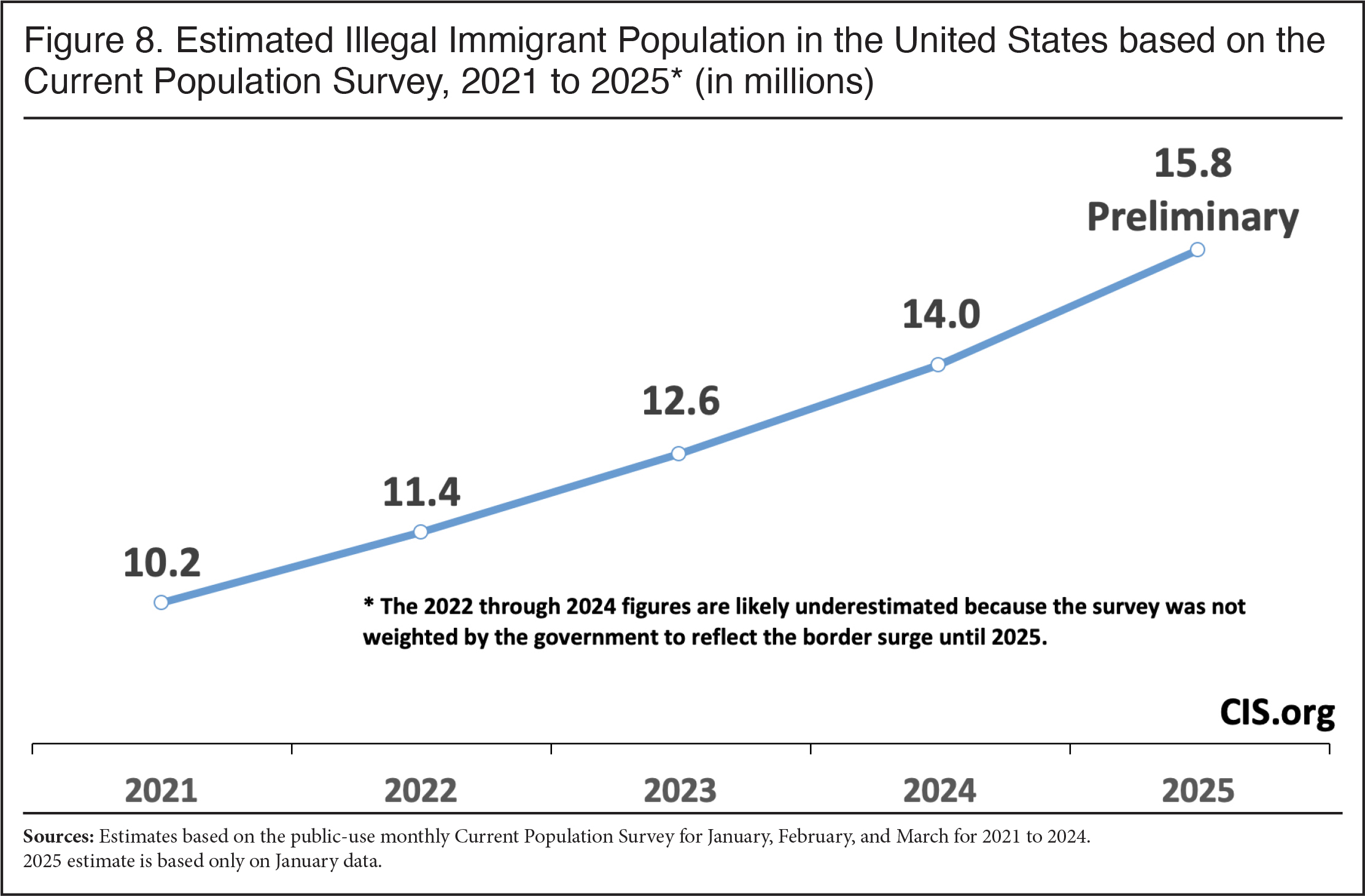
How large would this amnesty be? Having recently written a report on the illegal immigrant presence in each Census-identified occupation, I re-ran the numbers based on the industries that Trump selected for protection.1 The results show that about 12.5 percent of illegal immigrants are covered. Since the Center has estimated that there were 15.8 million illegal immigrants in the U.S. in January – see the figure below – that implies two million amnesty recipients. The total would increase to the 2.5 to 3.0 million range if we count the dependents of these immigrants who also do not have legal status.
 |
As large as those numbers sound, they only begin to measure the damage to immigration enforcement. For one thing, the amnesty signals to illegal immigrants that self-deportation is irrational. Because DHS manpower is limited, meaningful reductions in the illegal population require voluntary returns as a complement to direct removals. Illegal immigrants may indeed leave voluntarily if they believe their employment opportunities have diminished and their chances of forcible removal have increased. Administrative amnesty teaches them the opposite – if they find a job in a favored industry, the authorities won’t bother them.
The same logic applies to potential illegal immigrants who are considering a visa overstay or an unauthorized border crossing. Tough talk about enforcement may have deterred them before, but now they know that, once here, they can stay as long as they find a protected job.
Exempting whole classes of illegal immigrants from deportation also changes the terms of the debate, distracting from the more fundamental problems with mass immigration. DHS insists that it will focus on deporting the “worst of the worst criminal illegal aliens”, but violent crime is hardly the only problem associated with illegal immigration. What about the flouting of our immigration laws, the job competition with natives, the added cost of government services, the assimilation challenges, and the reordering of American politics? These are the grounds on which deportations need to be justified.
Finally, administrative amnesty is bound to enhance the cynicism that voters feel about our government, which sometimes seems to be run not by an ideological Republican or Democrat, but by entrenched interests resistant to reform. A good example would be politicians who say they favor immigration enforcement but then oppose the measures that actually work. In this case, it’s jobsite enforcement that works, and that’s why it is facing so much opposition.
End Note
1 The best matches in the data are crop production (IPUMS industry code 0170), animal production and aquaculture (0180), support activities for agriculture and forestry (0290), animal slaughtering and processing (1180), and accommodations and food services (8660-8690).


