The ‘Dignity Act’
- External Source
admin
- 0
- 25 minutes read

Summary
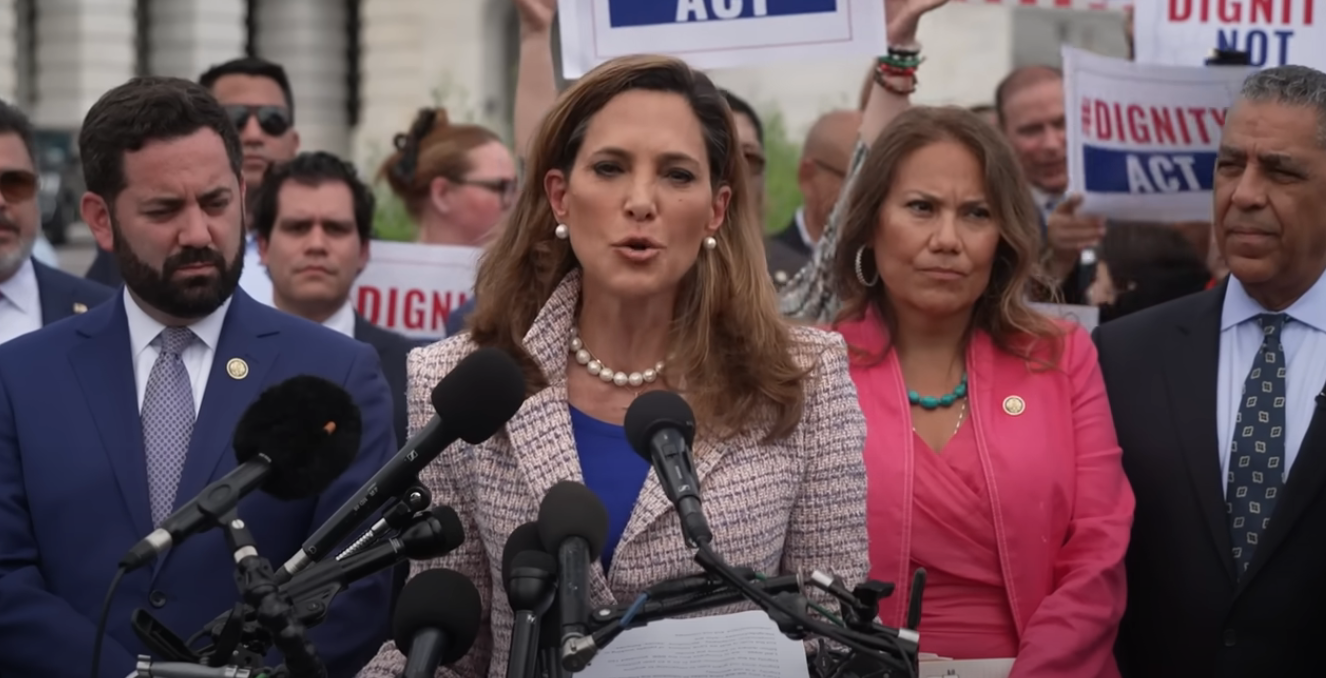
- On July 15, U.S. Rep. Maria Elvira Salazar (R-Fla.) introduced the “Dignity for Immigrants while Guarding our Nation to Ignite and Deliver the American Dream Act of 2025” (the “DIGNIDAD (Dignity) Act of 2025”), H.R. 4393.
- The Dignity Act grants first-tier amnesty (green cards) to somewhere between 2.5 and 2.7 million illegal aliens (Dreamers) who came to the U.S. before January 2, 2021, when under the age of 19 (plus any number of illegal aliens who will falsely but successfully claim that they did so by finding (paying?) two or more non-relatives to say they did).
- The Dignity Act grants second-tier amnesty (work permits) to somewhere around 11.8 million illegal aliens (Dignity-ers) who came to the U.S. before January 1, 2021. (There would be overlap in the eligible populations for these two amnesties, so you can’t simply add the numbers together.)
- Foreign nationals who DHS has already removed since the beginning of President Trump’s first term can apply from abroad to become Dreamers and Dignity-ers.
- The Dignity Act will increase legal immigration levels by 55 percent – over five million persons over the next decade. This is not what the American people were hoping for in electing Donald Trump as president.
- Just as “the tech industry has been roiled by layoffs and hiring freezes”, the “Dignity Act” allows aliens who have received doctoral degrees in STEM fields and health professions in the U.S. to qualify for numerically unlimited temporary work visas with no prevailing wage requirement. U.S. STEM students and workers will have to compete against these foreign workers.
The “DIGNIDAD (Dignity) Act of 2025”
I wasn’t going to dignify the “Dignity for Immigrants while Guarding our Nation to Ignite and Deliver the American Dream Act of 2025” (“DIGNIDAD (Dignity) Act of 2025”) with an appraisal. But here goes.
On July 15, U.S. Rep. Maria Elvira Salazar (R-Fla.) introduced H.R. 4393. Co-sponsors include 11 Democrats and 10 Republicans, including Michael Lawler (R-N.Y.), David Valadao (R-Calif.), Dan Newhouse (R-Wash.), Mike Kelly (R-Pa.), Brian Fitzpatrick (R-Pa.), Gabe Evans (R-Colo.), Marlin Stutzman (R-Ind.), Don Bacon (R-Neb.), Young Kim (R-Calif.), and Mario Diaz-Balart (R-Fla.). I presume that some of the Republican co-sponsors read the bill and liked what they saw. I presume that others might have simply said “Sure, why not.” As the late U.S. Rep. John Conyers (D-Mich.) once said with disarming honesty, “What good is reading the bill if it’s a thousand pages and you don’t have two days and two lawyers to find out what it means after you read the bill?” Well, the “Dignity Act” is only 261 pages long, but attention spans are not what they used to be.
Indignity No. 1: Amnesty for Illegal Aliens Who Came Here as “Kids”
The Dignity Act’s “Dream Act” grants amnesty to somewhere between 2.5 and 2.7 million illegal aliens (Dreamers) who came to the U.S. when they were 18 or younger (plus any number of illegal aliens who will falsely but successfully claim they came to the U.S. at such tender ages by finding (paying?) two or more non-relatives to say they did). Yeah, I know, all the 18-year-olds who crossed the border illegally were involuntarily dragged here by their parents. But the bill nowhere requires such a lack of culpability.
The bill grants “conditional” lawful permanent resident (LPR) status to illegal aliens who, among other requirements, entered the U.S. while under the age of 19, have been continuously physically present here since January 1, 2021, and:
- Have been admitted to institutions of higher education;
- Have been admitted to post-secondary career and technical education schools;
- Have obtained – in the U.S. – high school diplomas, general education development (GED) credentials, high school equivalency diplomas, credentials/certificates from secondary-level career and technical education schools, or recognized post-secondary credentials, etc.; or
- Are enrolled in secondary schools or in education programs assisting students in obtaining high school diplomas (or their equivalent), passing the GED or similar tests, obtaining certificates/credentials from career and technical education schools providing secondary-level education, obtaining recognized post-secondary credentials, etc.
This conditional LPR status is valid for 10 years, unless DHS chooses to extend it further. Conditional LPRs shall have the conditional basis removed (i.e, become “unconditional” LPRs) any time they have 1) obtained degrees from institutions of higher education or recognized post-secondary credentials from career and technical education schools; 2) served in the military for at least three years and, if discharged, receiving honorable discharges; or 3) demonstrated earned income for at least four years and for at least 75 percent of the time they have had valid employment authorization. Of course, “hardship” exceptions are available.
Also, Dreamers whom DHS has already removed from the U.S. since the beginning of President Trump’s first term can apply from abroad. And DHS can waive their required physical presence if they were continuously present for at least five years prior to their removal.
Numerical Impact
How large an amnesty are we talking about? Fwd.us estimated that in 2023 there were 3.4 million illegal aliens living in the U.S. who entered before the age of 18 and, in 2018, Randy Capps, the Migration Policy Institute’s director of research for U.S. programs, told the Washington Post that 3.6 million illegal aliens had entered the U.S. before age 18. This year, Fwd.us estimated that “nearly 2.5 million Dreamers living in the U.S. entered the U.S. at age 18 or younger, in 2020 or earlier, and are in school or have already completed high school or an equivalent credential”.
Using Fwd.us’s 2025 estimate, about 2.5 million illegal aliens would benefit from the “Dream Act”.
Jennifer Van Hook, professor of sociology and demography at Penn State University, has estimated that 20 percent of illegal aliens have resided in the U.S. for four years or less, the Migration Policy Institute has estimated that 21 percent have, and the Pew Research Institute has estimated that 20 percent have resided in the U.S. for five years or less. Using Fwd.us’s 2023 estimate (reduced by 20 percent to account for those aliens not present in the U.S. for the requisite length of time), about 2.7 million illegal aliens would benefit.
Indignity No. 2: The Dignity Program
The Dignity Act’s “Dignity Program” grants deferred action (i.e., suspends possible removal efforts) for seven years for illegal aliens who have been, among other requirements, continually physically present in the U.S. since December 31, 2020, and have made restitution payments of at least $1,000 (Dignity-ers).
Why the decision was made to require Dignity-ers to have been present in the U.S. one day before Dreamers is one of those imponderable questions for which we may never get an answer.
In any event, every two years, approved Dignity Program beneficiaries need to 1) report to DHS and provide their places of residence and testimony as to their good standing within the community; and 2) make additional restitution payments of at least $1,000 (until a total of $7,000 has been paid). They need to remain employed, serve as caregivers, or be enrolled in courses of study at institutions of higher education or at career and technical education schools (with waivers available for aliens 1) with dependents under the age of 12; 2) with disabilities or other impediments; or 3) who are over 65). Dignity Program beneficiaries will receive work authorization, and while they will have to pay an extra federal income tax of 1 percent, they don’t have to pay Social Security or Medicare taxes (7.65 percent) It is not clear whether their employers will also not have to pay Social Security or Medicare taxes for them, but if not, that will obviously give employers an incentive to hire Dignity-ers rather than U.S. citizens or legal immigrants.
Dignity-ers who successfully complete the Dignity Program program will receive Dignity status, which can be renewed in seven-year increments indefinitely. This status treats the Dignity-ers as lawful/work authorized nonimmigrants who may become LPRs if they otherwise qualify.
Numerical Impact
Given my colleagues Steven Camarota and Karen Zeigler’s latest estimate of the illegal alien population at 14.8 million and the estimates of the distribution of their length of presence in the U.S. by Jennifer Van Hook, the Migration Policy Institute, and the Pew Research Institute, somewhere around 11.8 million Dignity-ers would qualify for the Dignity Program. But I’ll round that up to 12 million since aliens who have already been removed from the U.S. since the beginning of President Trump’s first term can apply from abroad and DHS can waive their required physical presence if they were continuously present for at least fve years prior to their removal.
As the 2.5 to 2.7 million Dreamers would pretty much all also qualify as Dignity-ers, I would not add the numbers together.
Indignity No. 3: The Spouses and Minor Children of Employment-Based Green Card Recipients Will No Longer Be Counted Against Numerical Caps
The Dignity Act provides that the spouses and minor children accompanying/following to join recipients of employment-based immigrant visas as derivative beneficiaries (Derivatives) will no longer be counted against the 140,000 annual cap for such green cards.
Numerical Impact
DHS data indicates that the principal beneficiaries of approved petitions for employment-based immigrant visas who received their visas in fiscal year 2023 each had an average of 1.07 spouses/minor children derivative beneficiaries. In other words, 48.3 percent of all employment-based immigrant visas went to the principal beneficiaries and 51.7 percent went to their spouses and minor children.
Thus, this provision will increase the number of principle beneficiaries from about 67,600 to 140,000 a year and increase the number of Derivatives from about 72,400 to 149,800, thus more than doubling overall employment-based immigrant visa issuance from 140,000 to 289,800 (an increase of 107 percent). This represents a 15 percent increase over 1,014,523, the average number of total immigrant visas issued over the decade of (fiscal years) 2014-2023.
Indignity No. 4: Green Card “Backlog Reduction”
Because of numerical caps on the number of family-sponsored and employment-based immigrant visas available each year, millions of foreign nationals are on waiting lists for visas. The “Dignity Act” provides that alien beneficiaries (including Derivatives) of approved family-sponsored and employment-based immigrant visa petitions bearing priority dates (petition filing dates) of more than 10 years before they submit applications for immigrant visas or for adjustment to LPR status (Backloggers) and who pay a premium processing fee of $20,000 will receive immigrant visas irrespective of the numerical caps and will not be counted against such caps.
The Dignity Act also provides that alien beneficiaries (including Derivatives) of approved immigrant visa petitions bearing priority dates more than 10 years before they submit applications for immigrant visas or for adjustment of status will receive capless immigrant visas (without having to pay $20,000) to the extent that in each of fiscal years 2026-35, DHS will allocate to such Backloggers immigrant visas in an amount ensuring that by the end of 2035, all beneficiaries with priority dates more than 10 years old will have received immigrant visas.
Numerical Impact
Family-Sponsored Immigrant Visa Categories
According to the State Department’s August 2025 Visa Bulletin and its “Annual Report of Immigrant Visa Applicants in the Family-sponsored and Employment-based preferences Registered at the National Visa Center as of November 1, 2023”:
-
For the family-sponsored first preference (unmarried sons and daughters of U.S. citizens) category, immigrant visas are now available for persons with priority dates prior to and including July 15, 2016, for nationals of most countries; April 22, 2005, for nationals of Mexico; and July 15, 2012, for nationals of the Philippines. There are 154,123 nationals of countries other than Mexico and the Philippines (principals and Derivatives) on the waiting list, as well as 85,950 nationals of Mexico and 21,311 nationals of the Philippines.
As nationals of Mexico and the Philippines – a total of 107,261 – have been on the waiting list for family-sponsored first preference immigrant visas for more than 10 years, they will benefit from this provision, thus resulting in an eventual increase in legal immigration of 107,261 (spread over a decade).
However, an unknown number of additional foreign nationals will benefit to the extent that in the future there are a sufficiently greater number of beneficiaries of newly approved petitions than can be accommodated by this category’s annual numerical cap such that 10 year-plus waits result.
-
For the second preference “A” (spouses and minor children of LPRs) category, immigrant visas are now available for persons with priority dates prior to and including September 1, 2022, for nationals of most countries and February 1, 2022, for nationals of Mexico.
As no foreign nationals on the waiting list have been waiting for more than 10 years, this backlog clearance provision will not result in increased legal immigration levels (except to the extent that in the future there are a sufficiently greater number of beneficiaries of newly approved petitions than can be accommodated by this category’s annual numerical cap such that 10 year-plus waits result).
-
For the second preference “B” (unmarried sons and daughters of LPRs) category, immigrant visas are now available for persons with priority dates prior to and including October 15, 2016, for nationals of most countries; January 1, 2007, for nationals of Mexico; and April 15, 2012, for nationals of the Philippines. There are 117,903 nationals of Mexico (principals and Derivatives) and 40,315 nationals of the Philippines on the waiting list.
As nationals of Mexico and the Philippines – a total of 158,218 – have been on the waiting list for more than 10 years, they will benefit from this provision, thus resulting in an eventual increase in legal immigration of at least 158,218.
-
For the third preference (married sons and daughters of citizens) category, immigrant visas are now available for persons with priority dates prior to and including August 1, 2011, for nationals of most countries; February 1, 2001, for nationals of Mexico; and December 1, 2003, for nationals of the Philippines. There are 301,869 nationals of countries other than Mexico and the Philippines on the waiting list (principals and Derivatives), as well as 192,778 nationals of Mexico and 94,236 nationals of the Philippines.
As nationals of all countries – 588,883 – have been on this waiting list for more than 10 years, they will all benefit from this provision, thus resulting in an eventual increase in legal immigration of at least 588,883.
-
For the fourth preference (brothers and sisters of U.S. citizens) category, immigrant visas are now available for persons with priority dates prior to and including January 1, 2008, for nationals of most countries; November 1, 2006, for India; March 15, 2001, for nationals of Mexico; and January 1, 2006, for nationals of the Philippines. There are 1,223,035 nationals of countries other than India, Mexico, and the Philippines on the waiting list (principals and Derivatives), as well as 204,195 nationals of India, 688,740 nationals of Mexico, and 83,542 nationals of the Philippines.
As nationals of all countries – 2,199,512 – have been on waiting list for more than 10 years, they will all benefit from this provision, thus resulting in an eventual increase in legal immigration of at least 2,199,512.
Employment-Based Immigrant Visa Categories
According to the State Department’s August 2025 Visa Bulletin and its “Annual Report of Immigrant Visa Applicants in the Family-sponsored and Employment-based preferences Registered at the National Visa Center as of November 1, 2023” and U.S. Citizenship and Immigration Service’s ”Form I-140, I-360, I-526 Approved EB Petitions Awaiting Visa Final Priority Dates (Fiscal Year 2025, Quarter 2)”:
-
For the employment-based first preference (aliens with extraordinary ability, outstanding professors and researchers, and multinational executives and managers) category, immigrant visas are currently available for all nationals of most countries with approved petitions regardless of priority date, while immigrant visas are now available for persons with priority dates prior to and including November 15, 2022, for nationals of the Peoples Republic of China (PRC), and February 15, 2022, for nationals of India.
As no foreign nationals on the waiting list have been waiting for more than 10 years, this backlog clearance provision will not result in increased legal immigration levels (except to the extent that in the future there are a sufficiently greater number of beneficiaries of newly approved petitions than can be accommodated by this category’s annual numerical cap such that 10 year-plus waits result).
-
For the employment-based second preference (members of the professions holding advanced degrees and aliens of exceptional ability) category, immigrant visas are now available for persons with priority dates prior to and including September 1, 2023, for nationals of most countries; December 15, 2020, for nationals of the PRC; and January 1, 2013, for nationals of India. There are 331,561 nationals of India on DHS’s waiting list (principals, adjusted to 666,438 to account for an average of 1.01 Derivatives in 2003) and 28,921 on the State Department’s waiting list (principals and Derivatives).
Only nationals of India – an estimated total of 695,359 – have been on the waiting list for more than 10 years. They will benefit from this provision, thus resulting in an eventual increase in legal immigration of at least 695,359.
-
For the employment-based third preference (skilled workers and professional with bachelor’s degrees) category, immigrant visas are now available for foreign nationals with priority dates prior to and including April 1, 2023, for nationals of most countries; December 1, 2020, for nationals of the PRC; May 22, 2013, for nationals of India; and February 8, 2023, for nationals of the Philippines. There are 102,481 nationals of India on DHS’s waiting list (principals, adjusted to 213,160 to account for an average of 1.08 Derivatives in 2023) and 15,030 are on the State Department’s waiting list (principals and Derivatives).
Only nationals of India – an estimated total of 228,190 – have been on the waiting list for more than 10 years. They will benefit from this provision, thus resulting in an eventual increase in legal immigration of at least 228,190.
-
For the employment-based third preference “unskilled worker” category, immigrant visas are now available for foreign nationals with priority dates prior to and including July 8, 2021, for nationals of most countries; May 1, 2017, for nationals of the PRC; and May 22, 2013, for nationals of India. There are 202 nationals of India on DHS’s waiting list (principals, adjusted to 420 to account for Derivatives), as are an uncertain number on the State Department’s waiting list (as the State Department does not separately list the number of nationals of India on the “unskilled worker” waiting list).
Only nationals of India – at least about 420 – have been on the waiting list for more than 10 years. They will benefit from this provision, thus resulting in an eventual increase in legal immigration of at least about 420.
-
For the employment-based fourth preference (special immigrants) category, immigrant visas are currently unavailable for any nationals of any countries. There are 214,771 foreign nationals on DHS’s waiting list (principals, adjusted to 255,577 to account for an average of 0.19 Derivatives in 2023), as well as 1,951 on the State Department’s waiting list (principals and Derivatives, including religious workers).
While an estimated 257,528 persons are on the waiting list, I do not believe they have been waiting for more than 10 years, as the March 2025 Visa Bulletin listed a priority date for nationals of all countries of August 1, 2019. Thus, the backlog clearance provision will likely not result in increased legal immigration levels for this category (except to the extent that in the future there are a sufficiently greater number of beneficiaries of newly approved petitions than can be accommodated by this category’s annual numerical cap such that 10 year-plus waits result).
-
For the employment-based fourth preference religious workers category, immigrant visas are similarly unavailable for nationals of all countries, with 2,667 foreign nationals on DHS’s waiting list (principals, adjusted to 3,174 to account for Derivatives).
As with the general fourth preference category, I do not believe anyone has been waiting for more than 10 years, since the March 2025 Visa Bulletin had a priority date for religious workers of all countries of August 2019.
- For the employment-based fifth preference (investors) category, immigrant visas are currently available for all nationals of most countries with approved petitions without regard to priority date, while immigrant visas now available for persons with priority dates prior to and including December 8, 2015, for nationals of the PRC and November 15, 2019, for nationals of India. There are 12,117 nationals of the PRC on DHS’ waiting list (principals, adjusted to 32,231 to account for an average of 1.66 derivatives in 2023), as well as 33,676 on the State Department’s waiting list (principals and Derivatives).
Only nationals of the PRC – about 65,907 – are on the cusp of being on the waiting list for more than 10 years. Should their priority date slip to over 10 years, they will benefit from this provision, thus resulting in an eventual increase in legal immigration of at least 65,907.
Family-Sponsored and Employment-Based Immigrant Visa Categories
An estimated total of about four million (4,043,750) foreign nationals on the immigrant visa waiting lists have been waiting for more than 10 years (or on the cusp), 3,053,874 on the family-sponsored waiting lists, and 989,876 on the employment-based waiting lists. They will benefit from this provision, thus resulting in an eventual increase in legal immigration of 4,043,750 over the next decade.
This represents a 40 percent increase over 1,014,523, the average number of immigrant visas issued over the decade of 2014-2023.
Thus, all told, the “Dignity Act” will increase legal immigration levels by 554,175 a year – 55 percent – over the next decade. This result is not what the American people were hoping for in electing Donald Trump as President.
Indignity No. 5: Unlimited Temporary Work Visas for Foreign Students Graduating with STEM Doctoral Degrees – with No Prevailing Wage Requirement
Just as “The Computer-Science Bubble Is Bursting” and the “tech industry has been roiled by layoffs and hiring freezes”, as Rose Horowitch reports in the Atlantic, the “Dignity Act” allows aliens who have received doctoral degrees in STEM fields and health professions from institutions of higher education in the U.S. to qualify for the numerically unlimited O temporary work visa category. However, unlike the numerically capped H-1B temporary visa program for high-skilled specialty workers, the O visa program – created for aliens with extraordinary ability in the sciences, arts, education, business, or athletics (and certain assistants) – has no requirement that foreign workers be paid the prevailing wage. U.S. STEM students and workers will have to compete against these foreign workers.


