France and Gaza Refugees
- External Source
admin
- 0
- 19 minutes read
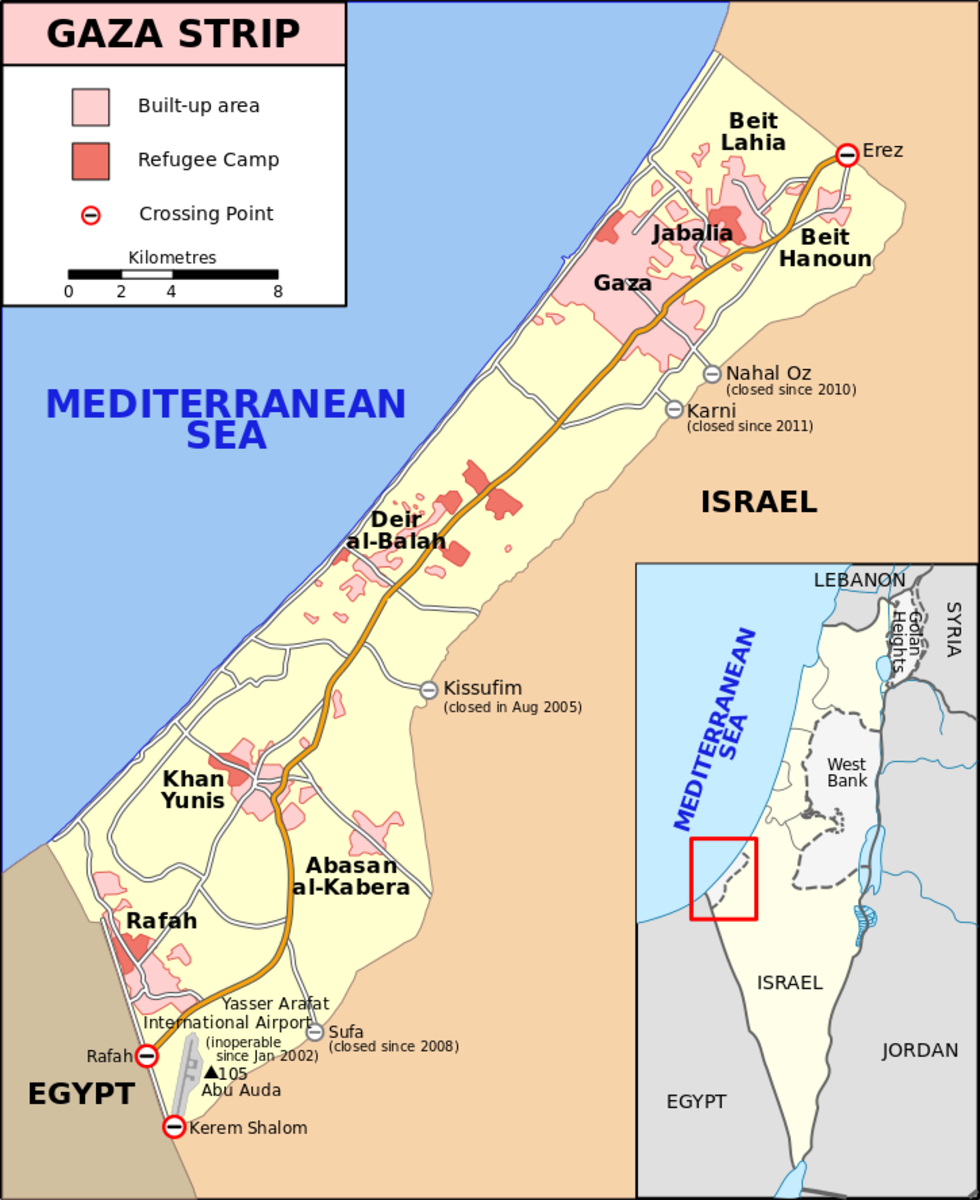
In a first-of-its-kind move, a French court has granted refugee status to Palestinians from the Gaza Strip who are not already recognized as such by the UN, on the grounds of “persecution” at the hands of Israeli forces.
The French Court Ruling
On July 11, France’s National Court of Asylum (CNDA) ruled that the “methods of warfare” used by the Israeli forces in Gaza since March 2025 (which marked the end of the ceasefire concluded between Israel and Hamas on January 19, 2025) were “sufficiently serious to be qualified as ‘acts of persecution’”. (All translations from French are mine.)
The ruling came in favor of a Palestinian woman and her minor son from northern Gaza who had left the Gaza Strip a few days after the October 7, 2023, terrorist attack by Hamas on Israel. The mother and son were taken in by the French embassy in Cairo and later made it to France with two consular passes in hand. Neither was under UN protection in Gaza (i.e. they had no refugee status) and were given access only to a lesser protection system in France. The woman, represented by counsel, turned to CNDA to be granted full refugee status on the basis of the 1951 Geneva Convention Relating to the Status of Refugees.
(Two UN entities are dedicated to assisting refugees: the UN High Commissioner for Refugees (UNHCR) and the UN Relief and Works Agency for Palestine Refugees (UNRWA). While UNHCR assists any refugee, UNRWA targets only Palestinian refugees. Palestinian refugees within the UNRWA area of responsibility (Jordan, Lebanon, Syria, the Gaza Strip, and the West Bank, including East Jerusalem) are not under UNHCR’s mandate.)
The French court overturned a previous decision issued in July 2024 by the French Office for the Protection of Refugees and Stateless Persons (OFPRA) which gave the woman and her son access only to a subsidiary protection system in France provided for by European law – a protection given to foreign nationals who do not meet the conditions for refugee status but could nonetheless face serious harm if returned to their home country (or country of last habitual residence for those who are stateless).
CNDA granted the mother and son refugee status on the grounds that they have a well-founded fear of being persecuted by the Israeli armed forces because of their “nationality” if they return to Gaza.
The court chose “nationality” from among the five grounds of persecution (race, religion, nationality, membership of a particular social group, and political opinion) despite the fact that Palestinians in Gaza are stateless. (France does not recognize Palestine as a state – although this might be changing soon with President Macron’s declared intent to recognize a Palestinian state this September.) The court considered that the applicants possess characteristics linked to “nationality”, which under the Refugee Convention covers “membership of a group united by its cultural, ethnic or linguistic identity, its common geographical or political origins, or its relationship with the population of another State”.
CNDA relied on UN reports to make its ruling, including those of UNRWA (which came under a heavy scrutiny for its staff’s participation in the October 7 attack), the Office for the Coordination of Humanitarian Affairs (OCHA), Special Committee to Investigate Israeli Practices Affecting the Human Rights of the Palestinian People and Other Arabs of the Occupied Territories, Secretary-General, Independent International Commission of Inquiry in the Occupied Palestinian Territory, and the UN General Assembly resolution adopted on June 12, 2025.
This new ruling means that all Palestinians from Gaza who are not under UNRWA’s protection (i.e. who have not already been officially recognized by the UN body as refugees) can now receive refugee status in France, rather than the lesser subsidiary protection.
While the ruling is limited from a factual point of view – it only concerns 20 percent of Gazans (some 200,000 individuals) – the remaining 80 percent are under UNRWA’s protection and thus officially designated as refugees – its implications are vast.
Benefits and Travel Access
Individuals recognized as refugees in France receive a renewable 10-year residence card, a travel document valid for all countries, except the country of origin or the one in which they previously resided.
Recipients of the lesser subsidiary protection get a multi-year residence card of up to 4 years and then a ten-year residency “when they have lawfully resided on French soil for five years.” They receive a travel document valid for all countries, except the country of origin or the former country of residence.
Both refugees and recipients of subsidiary protection in France are entitled to “social rights and support programs, in application of the labor code, the social security code, the social action and family code and the building and housing code.” They can also ask to be joined by certain members of their family, on the basis of family reunification.
Both can apply for a French nationality. For refugees, they can apply for naturalization upon obtaining their status (the condition regarding the length of residence in France “is not applicable” in their case). On the other hand, beneficiaries of subsidiary protection need to wait five years of legal residence in France before filing (some exceptions apply).
Holders of a French residence permit can travel within the Schengen area for short stays (maximum of ninety days).They do not, however, qualify for a U.S. Visa Waiver Program (ESTA) entry. Once granted French citizenship, however, they would be able to enter the United States without a visa under the Visa Waiver Program.
The Ruling’s Broad Implications
CNDA July 11 ruling has serious implications that could shape jurisprudence. It is, indeed, the first time a French court (or any court for that matter) has ruled that Palestinians in Gaza are being “persecuted” at the hands of Israeli forces. In February 2024, CNDA ordered that Palestinians from Gaza who were not registered by UNRWA were to be granted subsidiary protection. The court found that, since October 7, 2023, “the Gaza Strip has been experiencing a situation of indiscriminate violence of exceptional intensity,” capable of striking civilians and creating a “dramatic humanitarian situation.” In September 2024, CNDA ruled that those who were protected by UNRWA could apply for refugee status in France since their protection there could no longer be guaranteed by the UN agency.
But no previous ruling addressing any type of protection to be given to Palestinians in Gaza referred to Israeli forces as persecutors.
Implications for the United States
The French court’s recent ruling could establish new precedent and influence the body of law, not just in France and Europe but across the Atlantic.
I cannot but wonder how it would have impacted U.S. refugee policies if Kamala Harris had won the presidency. A Harris administration could have taken this ruling as an added incentive to resettle Gazans in the United States. The idea to open the door to Gazans to be resettled here as refugees (and thus as future American citizens) was indeed considered by the Biden-Harris administration.
Over a year ago, I wrote about the ongoing discussions by senior officials across several federal agencies under the previous administration to welcome Gazans here. The plan was never carried out, likely deemed problematic in the midst of a presidential campaign. Biden eventually dropped out of the race, Harris ran and lost.
It is safe to assume that the door would have been made wide open for Gaza refugees had Harris won instead of Trump. His win ended all talk of bringing Palestinians from Gaza here, at least for the remainder of his term.
I did warn against the idea last year as anti-Israeli protests (paired with anti-Semitic and anti-American sentiments) were spreading across U.S. campuses and the country.
First, Palestinians from Gaza could add to the growing dissonant voices already here. True, not all Gazans support Hamas’s actions, but many cheered the October 7 terrorist attack against Israel. We saw images of Palestinian civilians in Gaza, including children, spitting on Israeli hostages, hitting them, celebrating their capture. Do we know if one of these civilians would have ended up being resettled here? Should we ask Israeli hostages (those who survived and were released) to see if they recognize any of them?
At a minimum, we should not forget that refugees, like any migrant group, carry with them their beliefs, values, and biases. This reminder is especially critical now as we learn about a Palestinian woman from Gaza who arrived in France in July and recently posted “hateful” antisemitic views online. On her X account (now ordered closed), she reportedly glorified Adolf Hitler, praised the October 7 Hamas attacks, relayed calls for the execution of Israeli hostages, and even called for the “killing of Jews everywhere”. The 25-year-old admitted under the France Excellence Scholarship Program for Students for Gaza was due to start her classes at Sciences Po Lille university this autumn. She has since been deregistered. France’s Interior Minister Bruno Retailleau ordered for legal action to be taken against her, while stressing that “Hamas propagandists” had no place in France. French Foreign Minister Jean-Noël Barrot stated that the Palestinians already in France under this program (some 500 individuals) will be “subject to a new check” in light of the “failures that brought this young woman here. ”
Second, how reliable could the vetting of refugees from Gaza be? Could the U.S. government accomplish the impossible task of cross-checking identification and intelligence documents with Gaza’s local authorities, meaning Hamas?
Third, why bring Palestinian refugees to the United States instead of helping them access Arab countries in the region, many of which are already hosting millions of their compatriots? Wouldn’t that undermine Palestinians’ main demand, one on which a collective Palestinian identity is based and has been constantly reactivated and transmitted to younger generations – their “right to return”?
Fourth, in what looks now as a premonitory question, since refugees are, by definition, those who fear persecution, is the underlying implication that Palestinians in Gaza are persecuted by Israel? And how will this precedent change war engagements and accountabilities?
Here we are today, with that precedent established. What this will mean for future conflicts (on top of existing ones) remains to be seen. But it will undoubtedly have serious implications. Meanwhile, under Trump, and notwithstanding any French High Court ruling, the United States will likely not be welcoming Gazans any time soon.
Except for those who managed to become French citizens.
A last thought: How many Palestinians from Gaza were admitted to U.S. campuses under the Biden-Harris administration’s Welcome Corps on Campus program (now terminated by Trump)? And will those who came here face “new checks” as is happening in France?


