DHS Watchdog Reports Shocking Fraudulent Document Lapses under Biden
- External Source
admin
- 0
- 12 minutes read
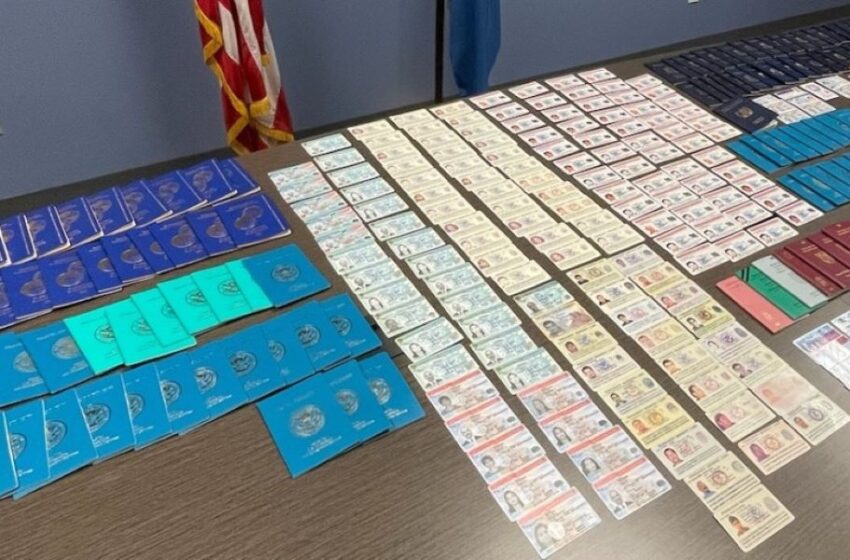
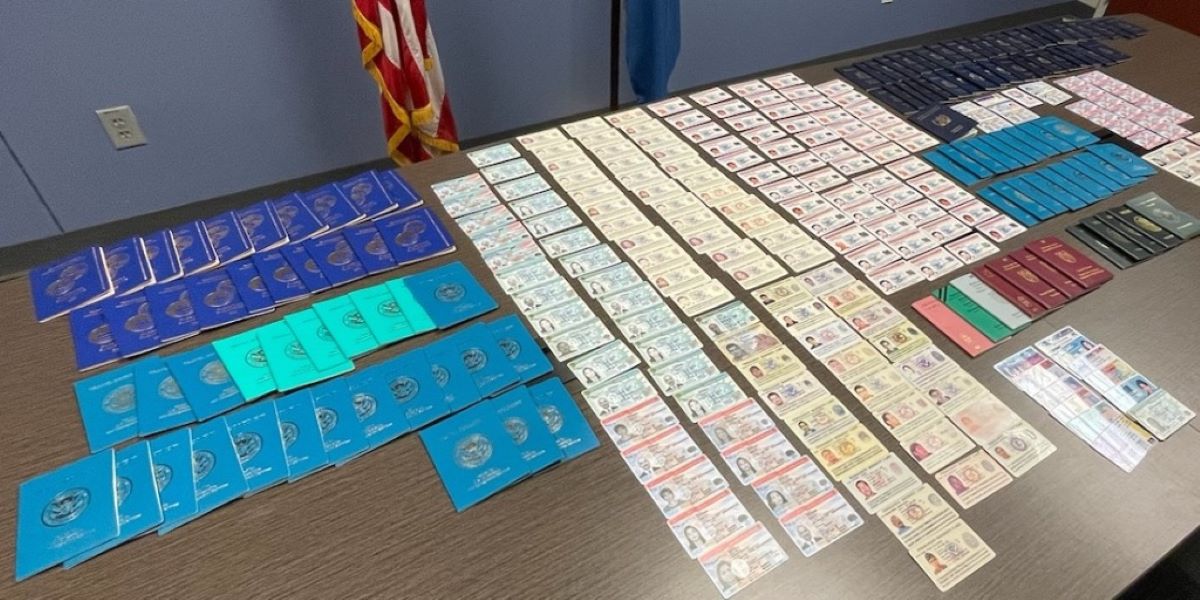 |
The DHS Office of Inspector General — the department’s internal watchdog — recently issued a report captioned “CBP Faces Limitations Detecting and Preventing Aliens’ Use of Fraudulent Documents to Enter the United States”. It details shocking lapses in CBP’s handling of cases involving aliens who presented fraudulent documents at the borders and the ports under the Biden administration between October 2021 and March 2024 — most notably, when aliens were given their bogus documents back before likely being allowed to enter the United States. The new CBP commissioner has his work cut out for him.
The Security Problems with Fraudulent Documents
In its final report, the 9/11 Commission — convened in the wake of the terrorist attacks of September 11, 2001, to examine how those terrorists were able to act and to make recommendations ensuring their actions could not be replicated — noted:
For terrorists, travel documents are as important as weapons. Terrorists must travel clandestinely to meet, train, plan, case targets, and gain access to attack. To them, international travel presents great danger, because they must surface to pass through regulated channels, present themselves to border security officials, or attempt to circumvent inspection points.
In their travels, terrorists use evasive methods, such as altered and counterfeit passports and visas, specific travel methods and routes, liaisons with corrupt government officials, human smuggling networks, supportive travel agencies, and immigration and identity fraud. These can sometimes be detected.
Pakistani national Ramzi Yousef, mastermind of the first World Trade Center bombing, and his co-conspirator, Palestinian national Ahmed Ajaj, both attempted to enter on the same plane at JFK with bogus passports.
Both were detected, though Yousef was released (enabling him to carry out that attack) due to a lack of detention space.
Inspectors detained Ajaj after they found bomb-making manuals and other fake passports in his luggage, but he, too, was ultimately released after serving six months for passport fraud instead of being deported.
Algerian Ahmed Ressam, who plotted to blow up Los Angeles International Airport on the millennium, sought admission at Port Angeles, Wash., with a fake Canadian passport. He was stopped, detained, and convicted (I’d tell you more, but modesty forbids).
And as the 9/11 Commission staff reported in their monograph, “9/11 and Terrorist Travel”, two of the September 11th hijackers “were carrying passports that had been manipulated in a fraudulent manner”.
They contained fraudulent entry-exit stamps (or cachets), probably inserted by al Qaeda travel document forgers to hide travel to Afghanistan for terrorist training.
The list goes on, and in fact the word “fraudulent” appears 88 times in that slim monograph.
Background
Both CBP officers in the agency’s Office of Field Operations (“OFO”, which controls the ports of entry) and Border Patrol agents (responsible for security at the border between the ports) are tasked by statute with inspecting alien “applicants for admission” to the United States.
During those inspections, as the OIG report notes, “officers and agents may conduct interviews, review information in various law enforcement databases, and examine travel and identification documents to determine an alien’s admissibility”.
CBP officers document alien encounters in CBP’s Unified Secondary (USEC) system, while Border Patrol agents do the same in the e3 online portal. Both of those systems “facilitate the screening of individuals’ biographic and biometric information using law enforcement and immigration databases”.
CBP officers and Border Patrol agents each receive fraudulent document training when they join the agency, and there are many tools they can use in the field to identify fraudulent documents, “including facial comparison technology, document scanners, fingerprint readers, black lights, and magnifying loupes”.
When CBP officers and Border Patrol agents find fraudulent documents, they are supposed to forward them to the agency’s Fraudulent Document Analysis Unit (FDAU), which “serves as the central repository and point of analysis for all fraudulent travel and identity documents found or recovered by CBP”.
The FDAU also “creates informational reports, identifies trends, and develops and delivers training”.
The DHS OIG Report
That includes mandatory follow-up training on document detection, but the first issue DHS OIG identified in the new report is that the agency’s compliance with that requirement is spotty, at best. That’s an issue because fraudsters are constantly refining their techniques and learning from their mistakes.
Then there’s CBP’s compliance with other, more basic, fraudulent document requirements. To assess officers’ and agents’ performance, OIG “reviewed 60 cases where aliens encountered at and between ports of entry were identified as having suspected fraudulent documents”.
Half of those cases were prepared by OFO, and the other 30 were prepared by Border Patrol agents — an important fact for reasons explained below.
Keep in mind that, like aliens who present no documents at all, aliens who present fraudulent documents are subject to expedited removal under section 235(b)(1) of the Immigration and Nationality Act (INA), which allows CBP to remove those aliens, with exceptions, without having to place them into removal proceedings before an immigration judge.
Shockingly, however, OIG determined that of the 60 cases it examined, “47 of these aliens were allowed to enter the United States”. Just four were detained, six were removed, and three were admitted after fraud concerns were resolved.
Criminal Penalties
Of course, the use of fraudulent documents at the border and the ports (and generally) is also a criminal violation under 18 U.S.C. § 1546, subjecting offenders to imprisonment of between 10 years (for a first or second offense not related to drug trafficking) to 25 years (“if the offense was committed to facilitate an act of international terrorism”).
Then there’s 18 U.S.C. § 1543, “forgery or false use of passport”, a crime that carries similar penalties.
Prosecution for those crimes is the strongest and best deterrent to fraud, but while some of those 60 aliens whose cases OIG examined were charged with civil immigration violations, none were charged criminally.
As DHS OIG noted, however:
Since the time of our site visits, CBP officials noted changes in processes for releasing aliens into the United States. Executive Order [EO] 14165, Securing Our Borders, terminated the practice of “catch-and-release,” whereby illegal aliens were routinely released into the United States shortly after their apprehension for violation of immigration law. The [EO] also states that the Secretary of Homeland Security must take all appropriate actions to detain, to the fullest extent permitted by law, aliens apprehended for violations of immigration law until their successful removal from the United States.
Score one for Trump II.
Recording and Reporting
It only gets worse from there, as OIG reports that “CBP personnel did not consistently record information about aliens’ use of fraudulent documents on required forms or enter the information into an Alien Registration file (A-file),” the A-file being a record created when CBP encounters aliens that follows those aliens throughout the removal process.
ICE attorneys (who represent the United States in removal proceedings) rely on that A-file information when seeking removals in immigration court, and yet no reference was made to the aliens’ use of fraudulent documents in 47 percent of the cases that OIG examined (28 out of 60).
Even that statistic is misleading, because all 28 of those cases were among the 30 prepared by Border Patrol agents, which means that they only recorded the use of fraudulent documents in subjects’ A-files in two cases, i.e., just 6.7 percent of the time.
The most astounding takeaway from the OIG report: CBP returned fraudulent documents to some of those aliens “who were likely released into the United States”
“Without all relevant information about fraudulent documents recorded on forms or entered into an A-file”, OIG explained, “decisionmakers in the adjudication and removal processes may be left unaware an individual is suspected of committing fraud”.
That’s an understatement, because as the Board of Immigration Appeals has held, the use of fraudulent documents undermines aliens’ credibility when applying for “relief” from removal in immigration court (like asylum), and in many cases, the testimony is the only evidence that relief applicants offer.
OFO isn’t off the hook, however, because OIG determined that in 23 of their 30 cases, officers failed to forward the fraudulent documents to FDAU, whereas Border Patrol failed to send fraudulent documents to FDAU in just one case.
Which brings me to the most astounding takeaway from the OIG report: CBP returned fraudulent documents to some of those aliens “who were likely released into the United States” (emphasis added).
How did that happen? Did CBP want aliens to keep their bogus documents as souvenirs, because if so, they may have overlooked the fact that if aliens used fake documents once, they’ll likely do so again, and repeatedly (or they’ll be recycled, and not in an environmentally friendly way).
DHS OIG just leaves that fact hanging out there, but CBP Commissioner Rodney Scott may want to send his troops a memo.
Biden Administration Border Failures
Scott has likely already sent several memos about OIG’s unacceptable findings in this report and held more than a few people accountable.
Note that the CBP fraud failures OIG identified happened under the Biden administration, when border security wasn’t a priority until it became a political albatross. Commissioner Scott is a Trump II appointee, and his agency has admitted the deficiencies identified and vowed to fix them. He’s career Border Patrol and a trustworthy guy, but expect an Inspector General follow-up nonetheless.


