The Battle Over Control of Immigration
- External Source
admin
- 0
- 19 minutes read

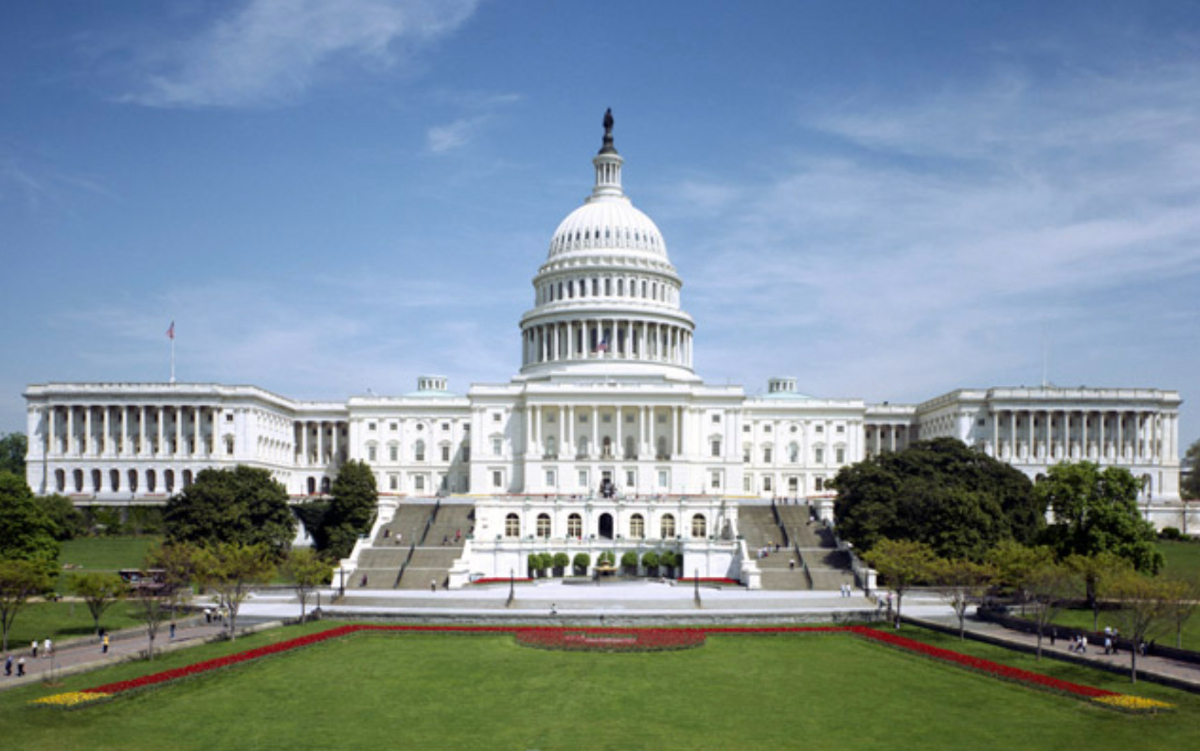
To quote Ferris Bueller, “Life moves pretty fast. If you don’t stop and look around once in a while, you could miss it,” and for the last decade the battle over immigration has been turbocharged. Now’s the time to step back and realize this isn’t a so much contest between how many immigrants the country wants or needs or the cultural impacts of mass migration so much as an issue of control of immigration. But under the Constitution, Congress, accountable to the voters, ultimately controls.
“Control Is a Tough Nut”
The newly installed Pope, Leo XIV, was recently asked to name his favorite movies.
Of the four he named, three were what you would expect the pontiff to enjoy: The Sound of Music (1965), a semibiographical account of a novice nun who leaves the cloister to care for a large, motherless family; It’s a Wonderful Life (1946), a tale of despair, self-sacrifice, and redemption; and Life Is Beautiful (1997), a story about a father who “uses a perfect mixture of will, humor and imagination to protect his son from the dangers around” the concentration camp to which they’ve been sent.
The fourth, however, is telling: Ordinary People (1980). If you’ve never seen it, the IMDb summary tells you all you need to know: “The accidental death of the older son of an affluent family deeply strains the relationships among the bitter mother, the good-natured father and the guilt-ridden younger son.”
It’s dark, and even the “happy” ending leaves little resolution as the mother (Beth Jarret, played by Mary Tyler Moore), leaves the son, Conrad (Timothy Hutton), and father, Calvin (Donald Sutherland) just when Conrad accepts that he’s not to blame for his brother’s death.
That it beat Raging Bull for the best picture Oscar tells you more about America pre-Reagan than it does about artistic merit, but in any event, the whole movie is about control: Beth can’t accept that fate derailed her overweening efforts to create the perfect family, and responds by trying to control her husband and son.
The story begins after Conrad attempts suicide, and his parents send him to a psychiatrist, Dr. Berger (Judd Hirsch). Berger eventually gains Conrad’s trust and tells the doctor he wants to be “more in control”. Berger admits that he’s “not big on control”, but agrees to help because “control is a tough nut”.
That the spiritual leader of the world’s 1.4 billion Catholics would “enjoy” a grueling, quarter-century-old flick about the challenges of control says much about the burdens of the papacy but also a lot about the world outside of the Vatican’s walls.
Because much of our current angst stems from a belief that we are increasingly losing control.
Few can understand, let alone control, AI; it promises incomparable change, but we don’t know whether it will be calamity (The Terminator) or some form of salvation (Interstellar).
AI is also driving stock markets, but is it a bubble or a boom? Having lived through downturns in 1987, 2000, and 2008, I have my thoughts, but regardless, it’s the difference between eating chateaubriand at retirement or roasting squirrels over a trash-can fire, though there’s little we can do to control it.
Why are Democratic Socialists like New York City Mayor-elect Zohran Mamdani on the ascent even though we all know how socialism ends? Because Gotham is the most chaotic place in the world, both good and bad, and he promised to control it in favor of the proletariat.
Or consider Covid, when billions sacrificed their liberties for what they were told was the common good. “Covid Karens” who snitched on those who broke nonsensical rules were the spiritual heirs to the hundreds of thousands of East German civilians who were “occasional” Stasi informants, in that while neither could control their government, at least they could control their neighbors.
Shifting Fronts in the Battle over Control of Immigration
Then, there’s immigration.
The battle for control over the subject has stirred up popular resentment in the Western world, with clashes following the “Unite the Kingdom” march in London in September and hundreds of thousands taking to German streets to protest a proposed bill to crack down on illegal migrants in February.
Each is a physical manifestation of a political opinion — both for and against immigration — in the face of a government and “elite” that doesn’t share the protesters’ views — in other words, a battle for control.
The First Trump Term
Nowhere, however, have the fronts in that battle shifted as they have in the United States since Donald Trump descended the golden escalator at his eponymous NYC tower on June 16, 2015, to announce his campaign for the 2016 presidential election.
In a seemingly unscripted address that day, he attacked one of his Republican opponents, former Florida Gov. Jeb Bush (R), as “weak on immigration”, promised to end President Obama’s “illegal executive order on immigration” (DACA), asked “when do we beat Mexico at the border?”, and vowed to “build a great, great wall on our southern border” and “have Mexico pay for that wall”.
Trump’s campaign was derided as a ”publicity stunt” until his opponents realized — too late — he was serious, but more importantly that he had tapped into a desire by Americans to control immigration.
His rhetoric alone quickly triggered a “Trump effect”, with an initial downturn in illegal entries at the Southwest border once he took office and a slowing of new migration over his first term.
The cartels and smugglers quickly reasserted control, however, as waves of illegal migrants (mostly families) exploited loopholes the new president was powerless to fix without congressional help, and immigrant advocates vied for control using the courts to stymie Trump’s immigration and border policies.
Trump, likely to his detriment, failed to highlight his immigration successes on the 2020 presidential campaign trail, even as a largely supine media echoed claims by his opponent, Joe Biden, that the incumbent “separated children from their parents at the border”.
“Biden’s Border Fiasco”
Once Biden took over, the gains of Trump I were lost, as the border descended into disaster in response to the new president’s “catch-and-release” policies and major cities began falling off fiscal cliffs in an effort to accommodate hundreds of thousands of improperly released migrants.
Biden’s supporters in the press downplayed the burgeoning migrant tsunami and did their candidate no favors once the sheer magnitude of the surge made its way into the public sphere. By August 2022, the editors at Bloomberg Opinion were warning that “Biden’s Border Fiasco Is Expanding”, while calling for “leadership” on the issue.
That leadership never appeared, and a last-ditch effort to blame Trump’s opposition to a deeply flawed and poorly understood 2024 “Senate border bill” fell on the deaf ears of an electorate that wanted control of the border, to the degree it became increasingly dour on “immigration” itself.
Trump redux found his old immigration script, and though Democratic party elites swapped Biden for his Vice President, Kamala Harris, as their 2024 presidential candidate, Harris couldn’t escape the stigma of having been the president’s “border czar”.
“Voters Were Fed Up Over Immigration”
Consequently, as a New York Times headline the day after the 2024 election explained: “Voters Were Fed Up Over Immigration. They Voted for Trump.”
In other words, the electorate wanted control over the entry and removal of aliens in the United States, and when they didn’t get it from one side, they picked the other.
The Trump II administration has viewed the election as a mandate to undo the harm of the Biden years by answering “mass migration” with “mass deportations”.
That has required a huge influx of additional manpower and detention resources for ICE and CBP, which Congress provided in H.R. 1, the “One Big Beautiful Bill Act”.
It has also prompted a reassessment of whether aliens who entered illegally but are present in the United States are eligible for bond.
Trump’s DHS has pointed to the detention mandates for alien “applicants for admission”, i.e., aliens who haven’t been formally admitted, in section 235(b) of the Immigration and Nationality Act (INA) in concluding illegal entrants present here cannot be released on bond, and DOJ’s appellate immigration tribunal, the Board of Immigration Appeals (BIA) has agreed.
Immigrants and their advocates have pushed back against that interpretation in demanding bond release hearings, and as Politico reported on October 31, “More than 100 federal judges have now ruled at least 200 times that” the administration’s interpretation of the law is in error.
You can add Judge Jeffrey Cummings of the U.S. District Court for the Northern District of Illinois to that list. In a November 13 order, he directed the government to release 615 aliens who were detained during DHS’s Chicago-area “Operation Midway Blitz” on bond under a different provision, section 236(a), of the INA.
Advocates’ efforts to retake control of the immigration issue through the courts harken back to Trump I, with the differences being (1) Trump II has “flooded the zone” by engaging in different enforcement efforts in various ways, and (2) this time around, Trump rolled out his initiatives quickly, giving his DOJ time to seek judicial review (Judge Cummings’ order is on appeal to the Seventh Circuit, for example).
The Protestors’ Veto
But not all of the opposition has involved legal niceties. Protestors countered Trump’s immigration enforcement efforts more directly, impeding ICE from arresting aliens by blocking immigration facilities, ramming federal vehicles, and (allegedly) doxxing officers. DHS claims there’s been an 8,000 percent increase in death threats against ICE, and a tenfold increase in assaults.
I’ve omitted the assassination attempts at immigration facilities in Dallas, Alvarado, and McAllen, all in Texas.
The protestors’ implicit argument isn’t that certain aliens should be protected from deportation, but that no alien should be removed, so long as they have made it here.
On November 12, the U.S. Conference of Catholic Bishops (USCCB) joined that chorus, issuing a “Special Message” on immigration, which stated: “We oppose the indiscriminate mass deportation of people.”
To say many of the factual assertions they make in that message, including their plaints about “the conditions in detention centers and the lack of access to pastoral care” and “that some immigrants in the United States have arbitrarily lost their legal status”, beg the question would be an understatement. The letter is replete with talking points, not facts, and many are questionable if not wrong.
Regardless, it raises the question of how the bishops think the Trump administration should respond to the millions of aliens who came here illegally between 2021 and January 20, 2025.
The bishops make clear that they “advocate for a meaningful reform of our nation’s immigration laws and procedures” (read: “amnesty”), but they never say what they would reform, how that reform would work, or whom they would allow to stay.
In any event, if amnesty were popular, it would have happened under Obama when Democrats held the House and White House and had a supermajority in the Senate. It’s beyond a non-starter after the past four years of non-enforcement.
And while the bishops “recognize that nations have a responsibility to regulate their borders and establish a just and orderly immigration system for the sake of the common good”, they never explain how the United States can fulfill that obligation without deporting those here illegally.
As I have explained in the past, under the Constitution, Congress, accountable to the voters, decides which aliens are allowed in and which must leave — not the president, the protestors, or the bishops. And no one should take control over such a critical issue from the people’s representatives.


