DHS Pulls Harvard’s Student-Visa Certification Authority
- External Source
admin
- 0
- 12 minutes read
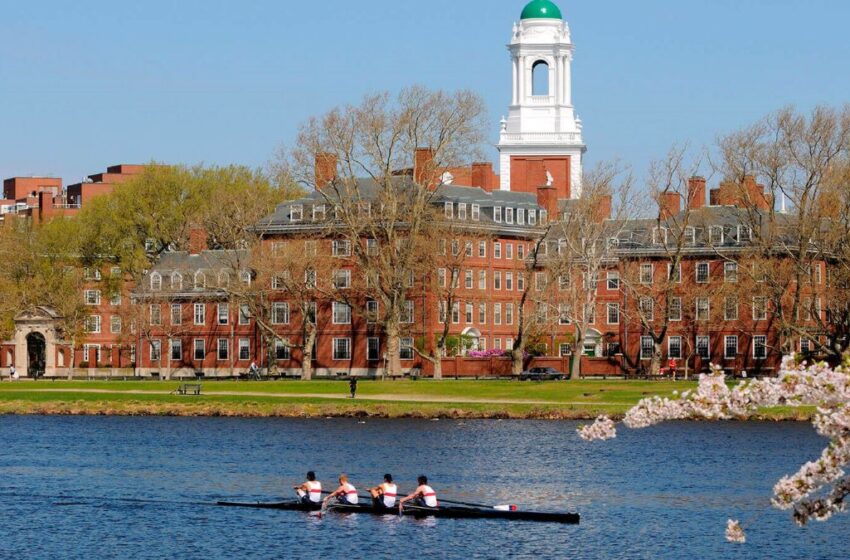

DHS announced Secretary of Homeland Security Kristi Noem this week ordered her department to “terminate the Harvard University’s Student and Exchange Visitor Program (SEVP) certification”, meaning the school will no longer be able to enroll new foreign students, and that current foreign students must either “transfer or lose their legal status”. The battle between the administration and America’s oldest university has entered a new front — and a lot of other schools are likely watching nervously to see how it all plays out.
F and M Nonimmigrant Visas
Aliens coming to the United States to study generally must enter under one of two nonimmigrant visa categories, F-1 or M-1. M-1s are for vocational and non-academic training, usually not courses of study offered at Harvard.
F-1 visas, on the other hand, allow nonimmigrant aliens “to enter the United States as a full-time student at an accredited college, university, seminary, conservatory, academic high school, elementary school, or other academic institution or in a language training program”. To be an F-1 nonimmigrant, an alien “must be enrolled in a program or course of study that culminates in a degree, diploma, or certificate”.
SEVP, SEVIS, and Certification
F-1 and M-1 visas are only available to prospective alien students who will attend a school “certified by the Student and Exchange Visitor Program (SEVP)”, the DHS program that administers the web-based Student and Exchange Visitor Information System (SEVIS).
SEVIS “ensures that government agencies have essential data related to nonimmigrant students and exchange visitors to preserve national security”, which is entered into the system by school employees known as “Primary Designated School Officials” (PDSO) and “Designated School Officials” (DSO).
SEVP is a component of the ICE Homeland Security Investigations (HSI) directorate’s National Security Investigations Division. As the agency explains:
Certification is the process schools go through to receive authorization from [DHS] to enroll F and/or M nonimmigrants. Within [ICE], SEVP reviews schools that desire to enroll nonimmigrant students to determine denial or approval of certification.
Once certified, the school has access to SEVIS and may issue Forms I-20, “Certificate of Eligibility for Student Status,” to prospective nonimmigrant students. To maintain certification, the school must comply with SEVP policies, as well as record keeping and reporting requirements stipulated in [regulation].
Noem’s Beef with Harvard
As Noem explained in a DHS press release:
This administration is holding Harvard accountable for fostering violence, antisemitism, and coordinating with the Chinese Communist Party on its campus. … It is a privilege, not a right, for universities to enroll foreign students and benefit from their higher tuition payments to help pad their multibillion-dollar endowments. Harvard had plenty of opportunity to do the right thing. It refused. They have lost their Student and Exchange Visitor Program certification as a result of their failure to adhere to the law. Let this serve as a warning to all universities and academic institutions across the country.
The seeds of this action were planted in April, when Noem cancelled two DHS grants worth $2.7 million after declaring the school “unfit to be entrusted with taxpayer dollars”, and sent a letter to Harvard asking for information related to foreign students.
In that letter, the secretary asked to the school to provide SEVP with, inter alia, “relevant information” (emphasis added):
regarding each student visa holder’s known illegal activity, and whether the activity occurred on campus … ; regarding each student visa holder’s known dangerous or violent activity, and whether the activity occurred on campus … ; regarding each student visa holder’s known threats to other students or to university personnel, and whether the activity occurred on campus … ; regarding each student visa holder’s known deprivation of rights of other classmates or university personnel, and whether the activity occurred on campus … ; on whether any student visa holders have left Harvard University due to dangerous or violent activity or deprivation of rights, and whether the activity occurred on campus … ; on whether any student visa holders have had disciplinary actions taken as a result of making threats to other student populations or participating in protests, which impacted their nonimmigrant student status … ; regarding each student visa holder’s maintenance of at least the minimum coursework to maintain nonimmigrant student status.
The last request is mundane, as nonimmigrant students must maintain a certain number of hours to remain in status. The other requests, however, are less so, pertinent to the more subjective question of whether Harvard has “failed to maintain proper facilities for instruction”, which, as I’ll explain below, is likely the key to DHS’s withdrawal of the school’s certification.
According to the DHS press release on that decertification, Harvard “brazenly refused to provide the required information requested”.
In an April 30 letter to its stakeholders, however, Harvard asserted it had responded to that request, though it does not appear that response was made public.
“Withdrawal of SEVP Certification”
Every SEVP-certified school must go through recertification every two years, “to ensure school officials are following regulations when enrolling F and M students”.
DHS’s action, however, does not appear to be part of that biannual review, but instead a “withdrawal of certification” (or what DHS describes as an effort to “terminate” Harvard’s SEVP certification) under 8 C.F.R. § 214.4(a)(2).
As that regulation states, SEVP certification can be withdrawn “on notice subsequent to out-of-cycle review … if the school … is determined to no longer be entitled to certification for any valid and substantive reason”, including failure to respond to a DHS request (under 8 C.F.R. § 214.3(g)(1)) for records relating to a nonimmigrant student or a “failure to maintain proper facilities for instruction”.
The questions DHS posed to Harvard in April are relevant both to the eligibility of foreign students to continue in F-1 status (certain crimes — including “crimes of violence” and felonies — violate an alien’s nonimmigrant student status and render offenders removable) and to any alleged failure by Harvard “to maintain proper facilities for instruction” of other students to attend Harvard free from harm or threats.
If the university is exposing the United States to potential Chinese espionage, it would likely provide a separate basis for withdrawal of certification not dependent on the regulations.
Given all this, it is possible DHS’s withdrawal of Harvard’s SEVP certification is a feint to force the school to provide DHS with the information it sought in April. Or, alternatively, it may simply reflect the administration’s frustration over what it sees as the school’s submission to harassment and protests by (among others) foreign students, impeding other students’ ability to receive “instruction”.
Harvard’s Unique Dependence on Foreign Students
According to Politico, 6,700-plus foreign students were enrolled at Harvard as of last fall, representing “about 27 percent of Harvard’s total enrollment”. Withdrawal of SEVP certification, therefore, would have a huge financial impact on the school (foreign students usually pay full freight) at a minimum, and other incalculable effects.
Some may argue Harvard is simply sticking up for its foreign students’ right to speak and protest freely, and if such protests are peaceful and harmless, the school may have a point.
DHS, however, cites to the May 13 conclusions of a government task force that found the school “has repeatedly failed to confront the pervasive race discrimination and anti-Semitic harassment plaguing its campus”, and that “Jewish students were subjected to pervasive insults, physical assault, and intimidation, with no meaningful response from Harvard’s leadership”.
Harvard has already run afoul of a Supreme Court that held in 2022 that the school’s “admissions programs violate the Equal Protection Clause of the Fourteenth Amendment”, and logically wants to avoid an implication it also countenances violent anti-Semitism. If so, it needs to respond with something more than blanket denials.
Harvard, like most universities, needs federal funding, and it’s uniquely dependent on foreign students. The Trump administration believes it can bar both the funding and the students, and now that Harvard has sued to enjoin DHS’s withdrawal of the school’s SEVP certification, it’ll be up to the courts to decide. Other schools will likely be watching that suit, intently.


