Kilmar Abrego Garcia Is Back — to Face Federal Prosecution
- External Source
admin
- 0
- 15 minutes read

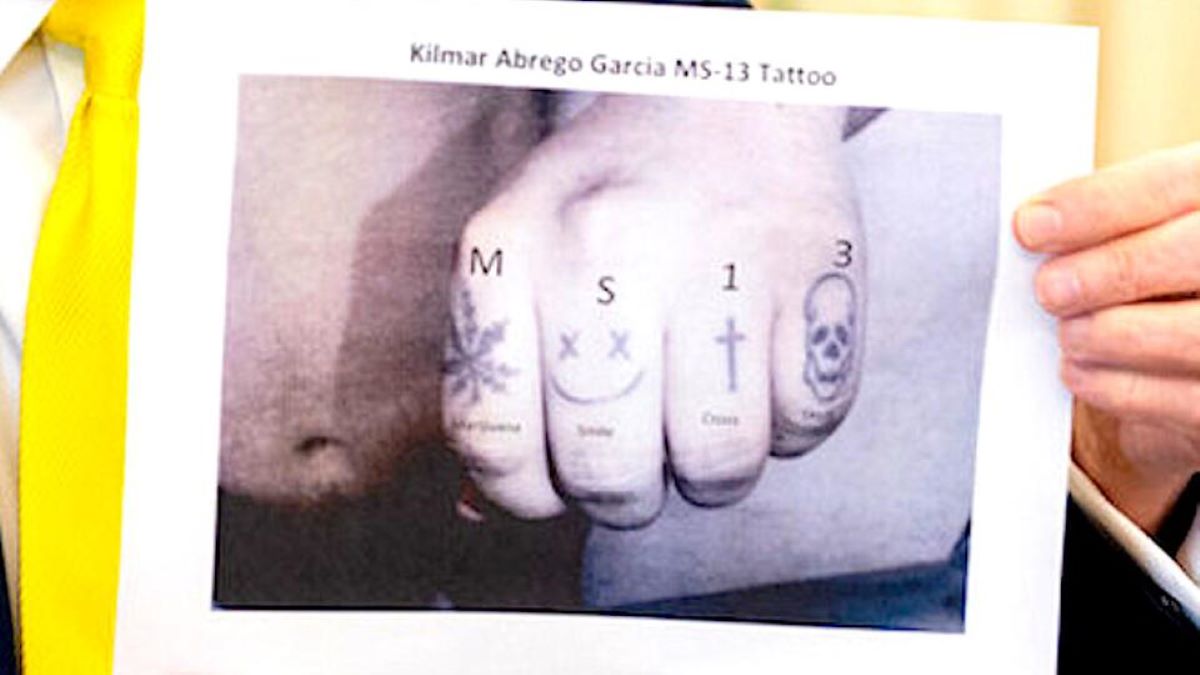
After a prolonged legal battle that stretched all the way to the Supreme Court, Kilmar Abrego Garcia — alleged MS-13 member and Salvadoran national turned “Maryland man” who was deported due to what the government admitted was “error” — is back in the United States. He didn’t return in the fashion he had hoped for, however, as he is now in federal criminal detention facing an indictment for unlawful transportation of aliens and conspiracy to transport aliens in U.S. District Court in Tennessee.
A Quick Recap
I have written extensively elsewhere about both Abrego Garcia’s immigration record and the federal court fight to return him, but here is a quick recap.
He entered illegally in March 2012, and was taken into custody by ICE in March 2019, based both on his illegal status and purported evidence linking him to MS-13, a violent criminal organization with its roots in Los Angeles and a significant presence in El Salvador and elsewhere.
In April 2019, an immigration judge (IJ) in Baltimore, Md., denied Abrego Garcia’s bond request, finding the evidence in the case “shows that he is a verified member of MS-13”. He appealed that bond denial, but the Board of Immigration Appeals (BIA) adopted and affirmed what it referred to as the IJ’s “danger ruling” eight months later.
While in detained removal proceedings, he filed an application for asylum, withholding of removal under section 241(b)(3) of the Immigration and Nationality Act (INA), and withholding of removal under the Convention Against Torture (CAT).
(As an aside, section 241(b)(3) withholding of removal is referred to as “statutory withholding” to distinguish it from “CAT withholding”, which is implemented by regulation, not directly by the INA.)
That application was assigned to a second IJ, who on October 10, 2019, granted Abrego Garcia’s statutory withholding application but denied his applications for asylum and CAT.
There are two things to note about the second IJ’s grant of statutory withholding.
First, to grant that protection the judge had to first order Abrego Garcia removed from the United States. The statutory withholding grant simply prevented his deportation to a specific country.
Second, due to that IJ’s repeated references at key points in his decision to “Guatemala”, it’s not entirely clear from that decision that El Salvador was the country from which removal was withheld. A separate document, commonly referred to as a “minute order”, would have cleared up this confusion, but to the best of my knowledge, it has never been produced (and may never have been issued).
Abrego Garcia was released following that grant, but rearrested by ICE on March 12, 2025, after which he was transferred to a detention facility in Texas. Thereafter, he was removed to the Terrorism Confinement Center (CECOT) in El Salvador sometime around March 16 under an agreement the Trump administration had struck with the government of that country.
On March 24 — nine days after he arrived in El Salvador — Abrego Garcia, his wife, and minor child, through counsel, filed a “Complaint for Injunctive Relief and Declaratory Judgment” (complaint) in federal district court in Maryland.
The case was assigned to U.S. district court Judge Paula Xinis, and on April 4, she issued an order granting the plaintiffs’ motion for a preliminary injunction. The terms of that order formed the basis of the government’s later appeal to the Fourth Circuit, and ultimately its application to the Supreme Court.
Specifically, Judge Xinis in her order directed the government to “facilitate and effectuate the return of … Kilmar Armando Abrego Garcia to the United States by no later than 11:59 PM on Monday, April 7, 2025”.
By ordering the government to “effectuate” the return of Abrego Garcia, the judge was essentially demanding that the administration engage in expedited diplomatic negotiations with El Salvador and requiring of those negotiations result in the return of Abrego Garcia — again, a Salvadoran citizen — to the United States before April 8.
The government quickly asked the Fourth Circuit to stay Judge Xinis’s order, noting (perhaps too directly) in its Emergency Motion: “The United States does not have control over Abrego Garcia. Or the sovereign nation of El Salvador.”
A three-judge panel of the Fourth Circuit denied that motion in an order issued on April 7, forcing DOJ to quickly file an application to vacate Judge Xinis’s order with Chief Justice John Roberts, the circuit justice for the Fourth Circuit.
The chief justice equally quickly issued an administrative stay of the district court order to give the full Court the opportunity to consider the government’s application, and on April 10, all nine justices issued an opinion weighing in on the hotly contested case.
The Court noted Judge Xinis’s order “properly requires the Government to ‘facilitate’ Abrego Garcia’s release from custody in El Salvador and to ensure that his case is handled as it would have been had he not been improperly sent to El Salvador”.
Nonetheless, the justices remanded the case to Judge Xinis to “clarify” her demand that the government “effectuate” the alien’s return, “with due regard for the deference owed to the Executive Branch in the conduct of foreign affairs”.
Various Democratic elected officials thereafter traveled to El Salvador, most notably Maryland Sen. Chris Van Hollen, who went there in mid-April and met with Abrego Garcia, after which he was transferred to a different detention facility in El Salvador.
Patty Morin — mother of a Maryland mother of five who was raped and murdered in 2023 while out jogging by an illegal alien from El Salvador — wrote an op-ed shortly thereafter, calling Van Hollen’s trip “a slap in the face” to her “family and his other constituents”.
In any event, now that Abrego Garcia is back in the United States, DOJ filed a June 10 reply with Judge Xinis in which it stated:
To be sure, the parties have had pointed disagreements on discovery issues, including because Defendants could not share state secrets and other protected materials that would have demonstrated their good faith compliance with the Court’s orders. But the proof is in the pudding — Defendants have returned Abrego Garcia to the United States just as they were ordered to do.
U.S. v. Abrego Garcia
On May 21, a grand jury in the Middle District of Tennessee handed down an indictment in U.S. v. Abrego Garcia, charging him with conspiracy to transport aliens under section 274(a)(1)(A)(v)(I) of the INA and “unlawful transportation of illegal aliens” under section 274(a)(1)(A)(ii) of the INA.
That indictment was unsealed by order of the court on June 6.
The first charge alleges that Abrego Garcia and an unidentified co-conspirator met “in and around 2016”, at which point they “agreed to work together to transport undocumented aliens for profit and financial gain” — eventually making “more than 100 trips between Texas and Maryland and other states”.
The resulting conspiracy allegedly included co-conspirators “outside the United States” who “facilitated the travel of undocumented aliens” — including “MS-13 members and associates” — “from El Salvador, Guatemala, Honduras, Ecuador, and elsewhere to illegally cross the United States border into Texas”.
Once those aliens were on this side of the border, the indictment alleges, Abrego Garcia picked them up “in the Houston, Texas area” and “then transported the undocumented aliens from Texas to other parts of the United States to further the aliens’ unlawful presence in the United States”.
Paragraphs 14 and 15 of the indictment allege (respectively) that in addition to transporting illegal aliens, Abrego Garcia “occasionally and simultaneously transported firearms illegally purchased in Texas” and “narcotics purchased in Texas” for “distribution and resale in Maryland”.
Abrego Garcia, however, is not charged with either firearm or drug smuggling in that indictment.
Paragraph 5 alleges that Abrego Garcia was “a member and associate of” MS-13, and paragraph 16 alleges “members and associates of MS-13 in Maryland” would occasionally accompany Abrego Garcia on his smuggling trips. Paragraph 17 further alleges Abrego Garcia and his co-conspirators would “on various occasions throughout the conspiracy” transport illegal alien “MS-13 members and associates”.
The most disturbing allegations, however, are in paragraph 27.
It claims Abrego Garcia would “sometimes” bring “close relatives” on his alleged smuggling trips, but that another co-conspirator (“CC-6”) “received reports from undocumented aliens” that during certain trips when he didn’t bring a relative, Abrego Garcia “had abused some of the female undocumented aliens”.
CC-6 purportedly told Abrego Garcia and two other co-conspirators (CC-1 and CC-2) about those reports, and “directed CC-1 and CC-2 to cause” Abrego Garcia “to stop the abuse” because it was “bad for business”.
The second charge relates to a now infamous incident in which Abrego Garcia was purportedly stopped on I-40 in Cookeville, Tenn., by a Tennessee Highway Patrol trooper for speeding in November 2022. As AP described a video of that stop, which was released in early May:
The body-camera footage shows a calm and friendly exchange between officers with the Tennessee Highway Patrol and Abrego Garcia. He was pulled over for speeding in a vehicle with eight passengers and said they’d been working in Missouri.
Officers then discussed among themselves their suspicions of human trafficking because nine people were traveling without luggage. One of the officers said: “He’s hauling these people for money.” Another said he had $1,400 in an envelope.
AG Bondi Presser
On June 6, Attorney General (AG) Pam Bondi held a press conference to announce Abrego Garcia had returned to the United States and to discuss the charges in the now-unsealed indictment.
She began by thanking Salvadoran President Nayeb Bukele “for agreeing to return [Abrego Garcia] to our country to face these very serious charges”. As the AG explained, “our government presented El Salvador with an arrest warrant, and they agreed to return him”.
Bondi claimed that “Abrego Garcia has played a significant role” over the past nine years “in an alien smuggling ring” in which “thousands of illegal aliens were smuggled”, and that the grand jury found “this was his full-time job”.
She alleged Abrego Garcia had “traded the innocence of minor children for profit” in smuggling minor aliens, and “was part of the same smuggling ring responsible for the death of more than 50 migrants in 2021 after the tractor trailer” they were in “overturned in Mexico” (paragraph 26).
Most significantly, Bondi claimed “a co-conspirator alleged” Abrego Garcia “solicited nude photographs and videos of a minor” and that a co-conspirator also alleged he “played a role in the murder of a rival gang member’s mother”. Notably, however, there are no charges relating to those claims in the indictment.
As with all pending criminal charges, the defendant enjoys a presumption of innocence until proven guilty, but if these charges are true, it explains why DHS was so interested in deporting Abrego Garcia to begin with.


