Operation Midnight Hammer and the Threat of Iranian Sleeper Cells
- External Source
admin
- 0
- 8 minutes read

Massive U.S. military strikes on Iranian nuclear facilities, codenamed Operation Midnight Hammer, have raised concerns that the Islamic Republic will respond with terrorist attacks on the American homeland via “sleeper cells or sympathizers acting on their own”. The Biden border crisis has left the United States vulnerable to such actions, and it will likely take years for that threat to pass.
The mullahs didn’t take kindly to the airstrikes, and the Iranian government has vowed a retaliatory response to both Midnight Hammer and the earlier Israeli attacks that have crippled its bases and infrastructure.
On June 23, Iran fired 14 missiles at the U.S. air base in Qatar, but President Trump reported Tehran gave us the heads-up about that attack and no casualties were reported after the missiles were shot down by “U.S. and Qatari Patriot batteries”.
Israel, on the other hand, has received no such courtesies, with Iran continuing to fire missiles at what Supreme Leader Ayatollah Ali Khamenei refers to as “the Zionist enemy” even after a reported cease-fire agreement in the region.
It’s a long way from Iran to the U.S. homeland and having no aircraft comparable to the B-2 in its arsenal, the Islamic Republic will likely have to satisfy itself with conventional attacks on nearby U.S. assets.
“The Threat of Sleeper Cells”
That assumes the mullahs stick to conventional attacks, and that’s not a sure thing. Iran hasn’t found itself on the State Department’s “State Sponsor of Terrorism” list for the better part of more than four decades for nothing.
In fact, terror attacks through various proxies — Hamas, Hezbollah, the Houthis — are Tehran’s preferred method of asserting its power. And I haven’t even mentioned the fact that Iran has sheltered senior al Qaeda members for years.
On June 22, D.C. tipsheet The Hill reported: “The threat of sleeper cells in the U.S. has ‘never been higher,’ though there are no current specific threats, according to U.S. Customs and Border Protection (CBP).”
That report is based on an internal CBP memo sent on Saturday by the agency’s newly installed commissioner, Rodney Scott, in which Scott warned “thousands of Iranian nationals have been documented entering the United States illegally and countless more were likely in the known and unknown got-a-ways”.
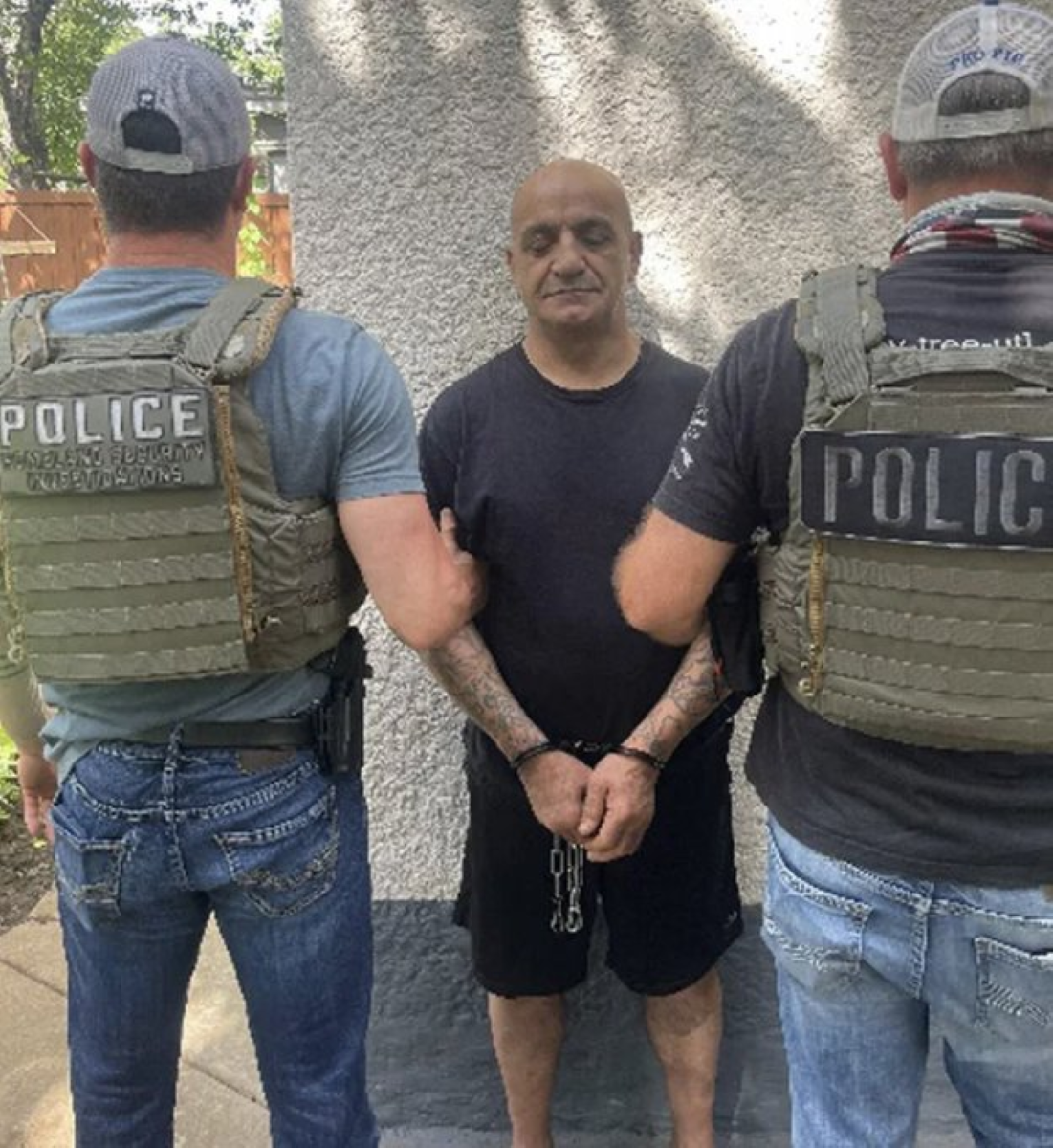
DHS recently reported the arrest of 11 Iranian illegal aliens in a multi-state operation.
Iranian Border Encounters Surged Under Biden
According to DHS’s Office of Homeland Security Statistics (OHSS), Border Patrol agents apprehended 1,750 Iranians who entered illegally between February 2021 and November 2024 — a twenty-fold increase compared to the prior seven fiscal years combined (80).
CBP officers encountered an additional 7,260 inadmissible Iranian nationals at the ports of entry during the same period, a more modest 62 percent increase over the combined total of FY 2014-20 (4,480).
Of course, the difference between those Biden CBP encounters and encounters in previous years is that most of those encountered under Bien were released into the United States, in violation of the Immigration and Nationality Act (INA) and after vetting that was imperfect, at best.
Sleepless Nights Thanks to 1.9 Million Got-Aways
We know from DHS Office of Inspector General reports and Center reporting that aliens on the terror watchlist encountered by CBP were released into the United States, but the biggest danger — as the Center warned in real time — comes from aliens who entered illegally under Biden but were never caught, the “got-aways” Commissioner Scott referred to.
Scott’s not the first, let alone the only, DHS official to issue such warnings.
In March 2024, then-Border Patrol Chief Jason Owens appeared on CBS News and explained that:
what’s keeping me up at night is the … known got-aways. … Why are they risking their lives and crossing in areas where we can’t get to? Why are they hiding? What do they have to hide? What are they bringing in? What is their intent? Where are they coming from? We simply don’t know the answers to those questions. Those things for us are what represent the threat to our communities.
Note that according to my former Democratic colleague on the House Judiciary Committee, Nolan Rappaport, there were approximately 1.9 million such got-aways under the last administration — more people than live in Philadelphia or San Diego, and roughly twice the population of my current hometown of Charlotte, N.C.
That’s a lot of sleepless nights.
More pointedly, DHS’s own Homeland Threat Assessment 2025 (HTA 2025), which was issued under the Biden administration in 2024, cautioned that:
individuals with terrorism connections are interested in using established travel routes and perceived permissive environments to facilitate their access to the United States. … Among state actors, we expect Iran to remain the primary sponsor of terrorism and continue its efforts to advance plots against individuals — including current and former US officials — in the United States. [Emphasis added.]
The “current and former US officials” in question? HTA 2025 explains it’s Donald Trump and members of his first administration whom Tehran holds “responsible for the 2020 death of its Islamic Revolutionary Guards Corps (IRGC)-Qods Force Commander and designated foreign terrorist Qassem Soleimani”.
Operation Midnight Hammer gives Iran even more reasons to go after Trump, but it will be tough for them to get to him now that he’s back in the White House. But the Islamic Republic can exact its revenge by going after our homeland, instead — thanks to vulnerabilities created by Biden’s feckless border policies.


