Living in a World Where Everyone’s Aggrieved, and Everyone’s a ‘Victim’
- External Source
admin
- 0
- 5 minutes read

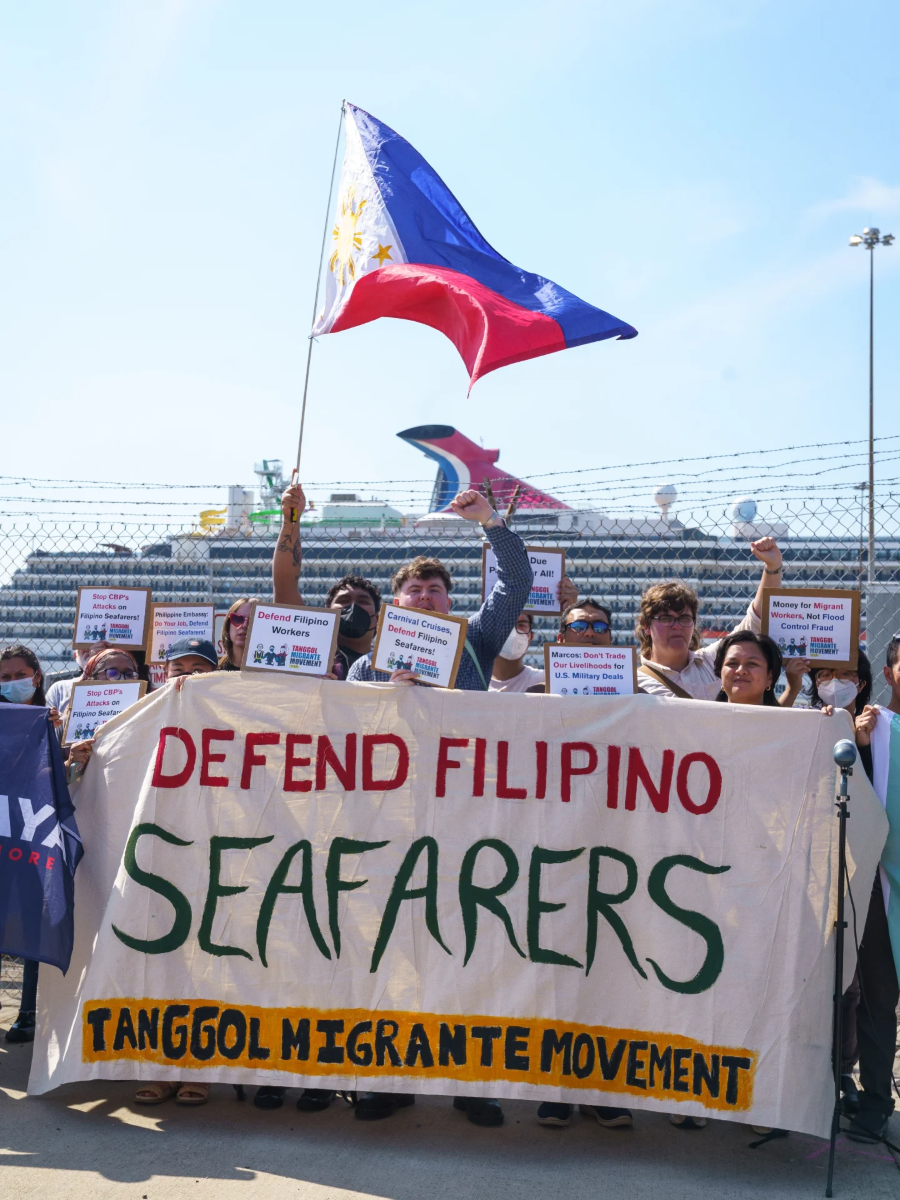
The Inquirer recently published an article titled “4 Filipino seafarers removed from Carnival Cruise ship in Baltimore”. It goes on to say, among other things:
Four Filipino crew members of the Carnival Pride cruise ship were detained and deported earlier this month while the vessel was docked in Baltimore, Maryland, sparking a protest Sunday by Filipino migrant groups who claimed the workers were denied due process.
The incident took place on Sept. 7 and was first reported by Marino PH, which said the seafarers were questioned over alleged drug possession and coerced into signing confessions related to child pornography accusations.
Early in my career many, many years ago, I served in New Orleans, which is an extremely busy maritime port, albeit more for bulk cargo than cruise lines. We dealt often with both stowaways and merchant mariners, who are only admitted conditionally into the U.S. for the period of time the vessel will be in port, and in no event to exceed 29 days if the crewmembers are admitted at all, which is a matter in the discretion of the inspecting officer who must, in a short period of time, make judgments. For instance: Is this person skilled in his profession and a long-time mariner, or a first-tripper looking to jump ship at the first opportunity? The manifest would offer clues, e.g. “seaman first class” vs. “ordinary seaman”, if you looked for them. So did the passport presented by a crewmember. Did it hold a cornucopia of entry and exit stamps from all over the shipping lanes this vessel traveled, or was it disturbingly clean?
Having conducted ship inspections on many an occasion, I can recall innumerable times when the entire crew, save perhaps the captain, his second in command, and quite possibly the purser, were ordered detained on board. This was not an anomaly. It has been the state of immigration law for as long as I can remember, and there are valid reasons for the strict controls over alien crewmembers, not least of which is the recognition that federal immigration systems would be quickly overwhelmed in this one area of law alone, were it not so.
By way of example, State Department statistics tell us that in Fiscal Year 2024 alone, it issued about 400,000 visas for crewmen (an aggregate of the “C1/D” and “D” visa categories). Now consider that figure is for one year alone — and that many such visas are issued for multiple entries over multiple years, year in and year out — and you get a quick scope of the volume, were strict statutory controls not in place.
Given all of that, I find it difficult to credit that the removal of four “seafarers” of any nationality anywhere in the U.S. is worthy of attention. But then there is that “denied due process!” battle cry by which so many of the afflicted plant their flag. It is as if the mere recitation of the phrase acts as an incantation to render the workings of the law ineffectual — that is, if the way the law works isn’t to one’s liking.
Well, here’s the harsh truth:
[A]ny immigration officer may, in his discretion, if he determines that an alien is not a bona fide crewman, or does not intend to depart on the vessel or aircraft which brought him, revoke the conditional permit to land which was granted such crewman under the provisions of subsection (a)(1), take such crewman into custody, and require the master or commanding officer of the vessel or aircraft on which the crewman arrived to receive and detain him on board such vessel or aircraft, if practicable, and such crewman shall be removed from the United States at the expense of the transportation line which brought him to the United States. [8 U.S.C. Sec. 1282(b)]
That is the due process to which alien crewmen are entitled. Not a whit more.
And, given the seriousness of the predicate allegations (drugs and child pornography), these crewmen should be extremely grateful that was the end of it.


