The Guatemalan Minors Case and the ‘Unaccompanied Alien Children’ Nightmare
- External Source
admin
- 0
- 14 minutes read
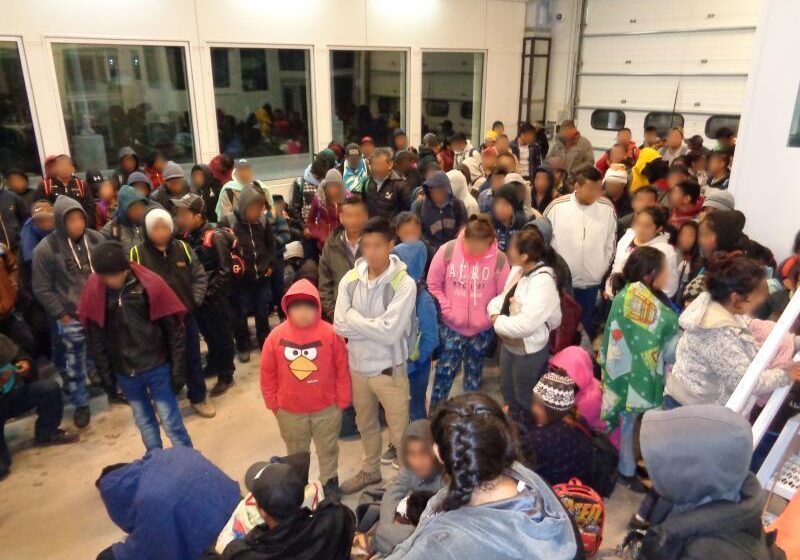
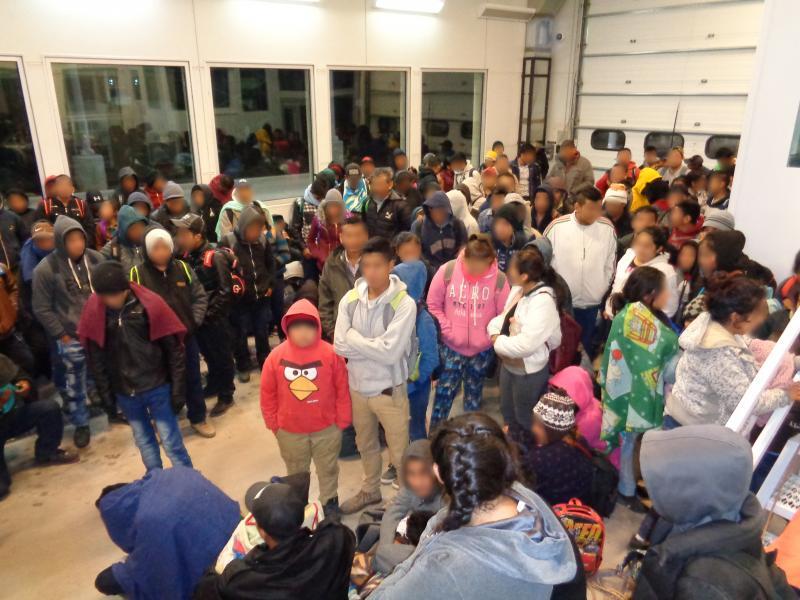
You may have heard that shortly after receiving a complaint filed on behalf of 10 young Guatemalan nationals on August 31, Judge Sparkle Sooknanan of the U.S. District Court for the District of Columbia ordered the government to “cease any ongoing efforts to transfer, repatriate, remove, or otherwise facilitate the transport of” those children and 66 others back home to their families. DOJ’s response is telling, as it reveals the government is attempting to restore common sense by turning to the statutes governing the care of “unaccompanied alien children” (UACs) to save kids from trafficking and other hells.
An Unmitigated, Congress-Made UAC Disaster
Curiously, six days before this case was filed, I argued “It’s Time for Congress to Protect ‘Unaccompanied Alien Children’”. That’s still true, but if the government prevails in L.G.M.L. v. Noem, its latest policies could serve as a bridge to a more orderly — and humane — system for handling alien kids.
But first, here’s how the U.S. government’s treatment of UACs went wildly off to the rails and provided an opening for smugglers.
Prior to the creation of DHS, the Immigration and Naturalization Service (INS) was responsible for detaining and caring for alien children without parents and guardians in this country.
Immigrants’ advocates objected, and though they didn’t prevail in the courts, they did convince the Clinton administration to strike a deal to govern the detention and release of those children, the Flores settlement agreement (FSA).
That wasn’t enough for some, however, and when Congress abolished the INS and created the Department of Homeland Security in the Homeland Security Act of 2002 (HSA), Democrats offered an amendment to section 462 of that act to formally define the term “unaccompanied alien child” and to strip ICE — INS’s successor in immigrant detention generally — of jurisdiction over UAC detention.
A Florida grant jury concluded in 2023 that “ORR is facilitating the forced migration, sale, and abuse of foreign children.”
That provision transferred responsibility for sheltering UACs encountered by DHS to the Office of Refugee Resettlement (ORR), a component of the Department of Health and Human Services (HHS) that to that point had no childcare responsibilities.
Several years later, a Democratic-controlled Congress reentered the UAC fray when it passed the Trafficking Victims Protection Reauthorization Act of 2008 (TVPRA).
Section 235 of the TVPRA turbocharged section 462 of HSA by splitting UACs into two groups: (1) kids from “contiguous” countries (Canada and Mexico); and (2) those from “non-contiguous” countries (everywhere else).
Under that provision, DHS can return UACs from contiguous countries if they haven’t been trafficked and don’t have a credible fear of return.
UACs from non-contiguous countries, however, must be transferred to ORR care and custody within 72 hours and placed into formal removal proceedings (UACs are not amenable to expedited removal), even if they haven’t been trafficked and have no fear of return.
More importantly, however, section 235 also directs ORR to then place nearly all children in its care with “sponsors” in the United States — usually a parent or guardian, but not always.
Not surprisingly, the number of non-contiguous UACs soared after Congress passed section 235 of the TVPRA, as parents (and more importantly smugglers) realized it all-but guaranteed that non-contiguous children who were smuggled illegally here would be released into this country, where they could remain indefinitely.
Of the nearly 19,700 UACs encountered at the Southwest border in FY 2009, when TVPRA took effect, 82 percent came from Mexico and 17 percent were from the “Northern Triangle” countries of El Salvador, Guatemala, and Honduras.
By FY 2019, however, those percentages had reversed, as 85 percent of the more than 69,000 UACs found at the U.S.-Mexico line came from the Northern Triangle and just 12 percent from Mexico.
Faced with a similar surge in non-contiguous UACs at the Southwest border, in FY 2014, President Obama asked Congress to give DHS “additional authority to exercise discretion in processing the return and removal of unaccompanied minor children from non-contiguous countries like Guatemala, Honduras, and El Salvador” (emphasis added) — that is, to close the section 235 loophole for non-contiguous UACs.
That didn’t happen, and consequently both section 462 of the HSA (codified at 6 U.S.C. §279) and section 235 of the TVPRA (codified at 8 U.S.C. § 1232) are roughly the same versions of those laws Obama had complained about.
Things Got Worse Under Biden
Things only got worse under the Biden administration. Between FY 2022 and FY 2024, Border Patrol agents at the Southwest border apprehended more than 380,000 UACs, 79 percent of whom (nearly 300,000 children) were from “non-contiguous” countries.
ORR struggled — often unsuccessfully — to keep track of the UACs in its custody and those it had released to sponsors.
In fact, the UAC situation devolved to such an extent under Biden that a grand jury convened by the state of Florida to examine the issue there concluded in a March 2023 report: “ORR is facilitating the forced migration, sale, and abuse of foreign children.”
Following the 2024 presidential election, President-elect Trump promised to find and return those kids, telling Time magazine in December:
We have 325,000 children here during Democrats — and this was done by Democrats — who are right now slaves, sex slaves or dead. … And what I will be doing will be trying to find where they are and get them back to their parents.
There’s a dispute as to how many alien children are unaccounted for, let alone how many of them ended up in peonage and forced prostitution, but there’s no question that too many found themselves in dire situations.
L.G.M.L. v. Noem
Which brings me to the 76 UACs whom the government attempted to return to Guatemala on August 31.
In their complaint in L.G.M.L., plaintiffs asserted:
On August 29, 2025, several media outlets reported that Defendants are planning to imminently remove hundreds of Guatemalan unaccompanied minors to Guatemala. Although Congress requires that unaccompanied minors be in the care and custody of [ORR] and permits their removal only in specific circumstances provided by statute, Defendants are imminently planning to illegally transfer Plaintiffs to [ICE] custody to put them on flights to Guatemala, where they may face abuse, neglect, persecution, or even torture, against their best interests.
By “Congress requires”, the complaint is alluding to 8 U.S.C. § 1232 (i.e., section 235 of the TVPRA), which it argues mandates the placement of those UACs into immigration court removal proceedings for however long those hearings take — and that, they contend, didn’t happen in these cases.
DOJ Goes Back to the Statutes
In its opposition, however, DOJ asserts that while placing those children into removal proceedings is one option for dealing with UACs under the HSA and TVPRA, it’s not the only one.
Specifically, the department cites section 462 of the HSA, 6 U.S.C. §279(b)(1)(H), which states: “Pursuant to the transfer made by subsection (a)” of UAC care from INS to ORR, “the Director of [ORR] shall be responsible for — reuniting unaccompanied alien children with a parent abroad in appropriate cases.” (Emphasis added.)
As DOJ notes, “ORR has exercised this authority in the past, including to reunite UACs with parents in Mexico, the United Kingdom, and other countries.”
After that, the department directed the court to the provision governing “non-contiguous” kids in 8 U.S.C. § 1232(b)(1), which explicitly states it is to be read “consistent with” section 462 of the HSA, 6 U.S.C. § 279, including the aforementioned subparagraph (b)(1)(H) therein.
Moreover, DOJ argues, while the TVPRA at:
8 U.S.C. § 1232 prescribes “[s]pecial rules” specifically for reunification of UACs from “contiguous” countries with their parents … it also gives HHS broader authority to develop general policies and procedures and operate pilot programs for reunification for UACs with their parents in any “country of nationality or last habitual residence.”
In that vein, the introductory paragraph to section 235 of the TVPRA, 8 U.S.C. § 1232(a)(1), specifically states:
In order to enhance the efforts of the United States to prevent trafficking in persons, [DHS], in conjunction with the Secretary of State, the Attorney General, and [HHS] shall develop policies and procedures to ensure that unaccompanied alien children in the United States are safely repatriated to their country of nationality or of last habitual residence. [Emphasis added.]
That language appears before the contiguous/non-contiguous split in that provision and therefore is meant to apply to all UACs — not just the ones from neighboring countries.
In fact, section 1232(a)(5)(A) directs the State Department, DHS, HHS, and NGOs, and other “experts” to “develop and implement best practices to ensure the safe and sustainable repatriation and reintegration of unaccompanied alien children into their country of nationality or of last habitual residence, including placement with their families, legal guardians, or other sponsoring agencies”. (Emphasis added.)
Note the use of the verb “repatriation” in those provisions, not “removal”. The latter is a term of art that signifies the formal return of an alien under the INA and the consequences flowing from such removals.
Plainly, Congress in both the HSA and TVPRA permitted — if not preferred — the federal government to return unaccompanied alien children to situations back home in which they would be properly cared for, in lieu of release with sponsors into the United States.
“In July 2025, the Government of Guatemala, through its Ambassador, Requested …”
If that’s true, why have successive administrations spent billions to shelter and place UACs with sponsors and struggled to keep track of them through the removal process? The answer apparently is that nobody asked the U.S. government to do anything different.
But as the DOJ brief explains:
In July 2025, the Government of Guatemala, through its ambassador, requested that the United States reunify Guatemalan UACs in ORR custody with their parents in Guatemala. In August 2025, Guatemala sent a diplomatic note stating that UACs who, either voluntarily or by judicial action, are returned to Guatemala, would be received safely by relevant government agencies for reunification with suitable parents or legal guardians. [Internal citations omitted].
That request prompted ORR to consult with other agencies and create what DOJ refers to as “reticulated criteria to identify UACs for whom parental reunification is ‘appropriate’ as in the UAC’s best interests”, and then for the office to review the records of Guatemalan UACs to identify kids meeting those criteria.
Among those eight criteria are findings that the UAC: doesn’t have a parent or legal guardian in this country; has a parent or legal guardian in Guatemala; doesn’t have a pending asylum claim; won’t be trafficked if returned; and “doesn’t have indications of child abuse/neglect perpetrated by a parent/legal guardian”.
If the child has a lawyer, the lawyer can oppose a return and the child won’t be repatriated. Otherwise, assuming all the remaining criteria are met, those children are subject to being sent back to their parents or legal guardians in Guatemala.
The Biggest Flaw in the TVPRA
There are many flaws in section 235 of the TVPRA, but the biggest is its failure to hold any government agency responsible for UACs once they are placed with sponsors.
Logically, that’s because Congress concluded their sponsors could be trusted to care for them, but 17 years of experience shows that’s not always true, and when it’s not the child can face dire consequences.
If alien children have been trafficked and won’t be trafficked back home, don’t fear persecution, and will return to parents and guardians who will care for them under the watchful eye of their home governments, why is a district court judge trying to keep them here? Likely because the court didn’t have all the facts. Now it does.


