SCOTUS Allows ICE Stops in Los Angeles
- External Source
admin
- 0
- 15 minutes read

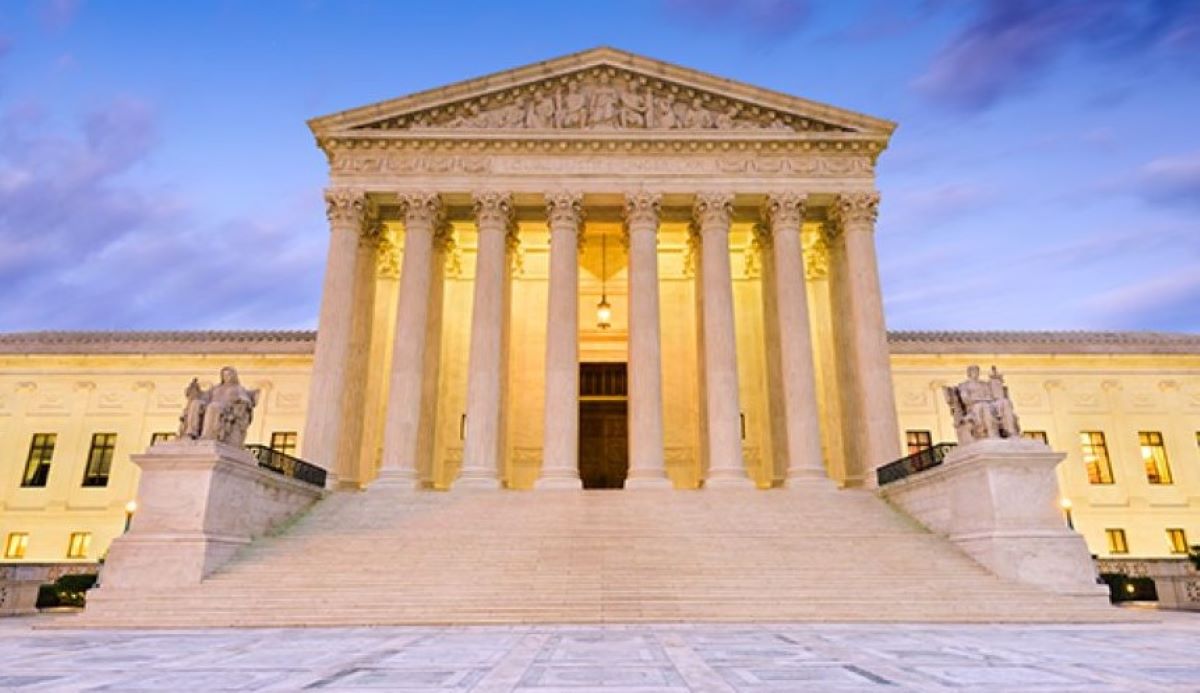
It’s been nearly two months since Judge Maame Ewusi-Mensah Frimpong of the U.S. District Court for the Central District of California (C.D. Calif., which includes Los Angeles) issued an injunction in Perdomo v. Noem, barring ICE officers from considering certain factors when stopping and questioning suspected illegal aliens in her district, and five weeks since the Ninth Circuit largely allowed that injunction to stand. Finally, on Monday the Supreme Court stayed that injunction by a 6-3 vote. That was inevitable, but Justice Kavanaugh’s concurrence shows the majority’s patience with lower courts on immigration matters is wearing thin.
A Quick Tutorial on Street-Level Immigration Enforcement and Burdens of Proof
Congress gave immigration officers expansive powers in the Immigration and Nationality Act (INA).
To start with, section 236(a) of the INA allows officers to issue administrative — not judicial — warrants to take custody of aliens believed to be removable from the United States, pending a decision on whether they are to be removed.
Even without a warrant, section 287(a) of the INA allows immigration officers to “interrogate any alien or person believed to be an alien as to his right to be or to remain in the United States”, and permits them to “arrest any alien”, if they have “reason to believe that the alien so arrested is in the United States in violation of the INA and regulations” and “is likely to escape before a warrant can be obtained for his arrest”.
This authority is not completely unfettered, however, as section 287 also requires immigration officers to take aliens arrested without a warrant for a determination by an examining officer “without unnecessary delay” on whether those aliens have a “right to enter or remain in the United States”.
That said, Fourth Amendment protections against “unreasonable searches and seizures” have been found to apply in the immigration context, and rules governing those protections have been developed through statute, regulation, and case law.
For example, the regulatory “standards for enforcement activities” at 8 C.F.R. § 287.8(b) state, in part:
Interrogation and detention not amounting to arrest.
(1) Interrogation is questioning designed to elicit specific information. An immigration officer, like any other person, has the right to ask questions of anyone as long as the immigration officer does not restrain the freedom of an individual, not under arrest, to walk away.
(2) If the immigration officer has a reasonable suspicion, based on specific articulable facts, that the person being questioned is, or is attempting to be, engaged in an offense against the United States or is an alien illegally in the United States, the immigration officer may briefly detain the person for questioning. [Emphasis added.]
As I explained on August 19, such hoary standards are drilled into every law student during criminal procedure class, and this reiteration will likely net you five points on the bar exam. But immigration officers live by them every time they head out.
Here’s a quick primer, though: No suspicion of illegal activity is required for an officer to speak to an individual objectively free to leave; reasonable suspicion of illegal activity is required for a detention stop; probable cause of illegal activity is required for an arrest; criminal — not civil immigration — convictions require the government to prove defendants engaged in illegal activity beyond a reasonable doubt.
In the immigration context, the burden of proof in immigration court depends on whether the respondent is, in fact, an alien, and whether that alien has been admitted to the United States or not.
Alienage is rarely a high burden, and under section 240(c)(2) of the INA, if respondents are “applicants for admission” — that is, haven’t been admitted to this country — they must prove they are “clearly and beyond doubt entitled to be admitted” and aren’t “inadmissible”, or alternatively have been admitted.
Conversely, under section 240(c)(3)(A) of the INA, ICE must prove “by clear and convincing evidence that, in the case of an alien who has been admitted to the United States, the alien is deportable”.
In either case, once removability is established, the respondent bears the burden of proving that he or she is eligible for any “relief” from removal (like asylum).
Judge Frimpong’s Order and the Ninth Circuit’s Decision
In her July 11 order granting an injunction in Perdomo, Judge Frimpong barred immigration officers from making “detentive stops” in the C.D. Calif. based on the following factors or combination of factors: (1) presence at particular locations such as bus stops, car washes, day laborer pickup sites, agricultural sites, and the like; (2) the type of work the individual is doing; (3) the individual speaking Spanish or speaking English with an accent; and (4) the individual’s apparent race or ethnicity — “except as permitted by law”.
Note that the C.D. Calif. encompasses the Los Angeles area and, with more than 20 million residents, it’s the most populous federal district in the country. More importantly, it’s also home to an estimated two million illegal aliens, meaning that 10 percent of the population there is subject to removal. For Trump’s deportation plans to have any impact, they must include enforcement operations in the C.D. Calif.
DOJ filed an emergency motion to stay that order with the Ninth Circuit on July 14, deriding it as “a sweeping, district-wide injunction that threatens to hobble lawful immigration enforcement by hanging a Damocles sword of contempt over every immigration stop” that “appears to be a first step to placing federal immigration enforcement under judicial monitorship”.
The three-judge Ninth Circuit panel, however, was largely unconvinced, denying the motion save for the “except as permitted by law” modifier in Judge Frimpong’s order, which it concluded was “impermissibly vague” given that “’what is permitted by law’ is not clear to lawyers and judges, much less lay persons who are the ‘target of the injunction’”.
The Long-Awaited SCOTUS Opinion
DOJ next turned to the Supreme Court for relief, filing an application with Justice Kagan (the circuit justice for the Ninth Circuit) to stay Judge Frimpong’s injunction on August 7.
There it sat until September 8, though to be fair the High Court is on its (well-deserved) summer hiatus.
When the justices did rule on that application, they (not surprisingly) stayed Judge Frimpong’s order pending a resolution of the government’s formal appeal before the Ninth Circuit and any request by the parties for further Supreme Court review.
There was little reasoning in that brief opinion, and (again not surprisingly) Justices Kagan and Jackson joined a dissent penned by Justice Sotomayor.
Justice Kavanaugh’s Concurrence
Justice Kavanaugh, who joined the remaining five justices in the decision, felt obliged to write a separate concurrence — and set the stage for what are sure to be many more immigration-related decisions to come.
He began by noting the indispensable nature of immigration stops and the government’s concerns that Judge Frimpong’s order “will substantially hamper its efforts to enforce the immigration laws in the Los Angeles area” before concluding that the government was likely to ultimately prevail in the case and would “suffer irreparable harm if a stay were not granted”.
I’ll skip over most of the (boring but important) part of Judge Kavanaugh’s concurrence dealing with standing except to note that he concluded:
Plaintiffs’ standing theory is especially deficient in this case because immigration officers … use their experience to stop suspected illegal immigrants based on a variety of factors. So even if the Government had a policy of making stops based on the factors prohibited by the District Court, immigration officers might not rely only on those factors if and when they stop plaintiffs in the future.
Score one for line-officer know-how.
More saliently, however, Justice Kavanaugh continued by noting that, “Under this Court’s precedents, not to mention common sense” the factors identified by Judge Frimpong “taken together can constitute at least reasonable suspicion of illegal presence in the United States.”
Score a second one for common sense, particularly given that, as he noted, “Illegal immigration is especially pronounced in the Los Angeles area.”
He also addressed the significant chilling effect Judge Frimpong’s order would have on immigration enforcement, a crucial factor in this case given what he admitted were “the millions of individuals illegally in the United States” and “the myriad ‘significant economic and social problems’ caused by illegal immigration”.
As Judge Kavanaugh explained, this injunction “threatens contempt sanctions against immigration officers who make brief investigative stops later found by the court to violate the injunction” and “The prospect of such after-the-fact judicial second-guessing and contempt proceedings will inevitably chill lawful immigration enforcement efforts.”
Make that two for common sense.
Note that Justice Kavanaugh did see the other side of the issue, admitting that “many (not all, but many) illegal immigrants come to the United States to escape poverty and the lack of freedom and opportunities in their home countries, and to make better lives for themselves and their families”, and that more than a few “may feel somewhat misled by the varying U.S. approaches to immigration enforcement over the last few decades”.
Still, he concluded:
the fact remains that, under the laws passed by Congress and the President, they are acting illegally by remaining in the United States — at least unless Congress and the President choose some other legislative approach to legalize some or all of those individuals now illegally present in the country. And by illegally immigrating into and remaining in the country, they are not only violating the immigration laws, but also jumping in front of those noncitizens who follow the rules and wait in line to immigrate into the United States through the legal immigration process.
“The Proper Role of the Judiciary”
All of these are important — and likely necessary — points, but you could drop them into most any immigration decision and they’d be apt but somewhat dispensable.
Justice Kavanaugh saved his most important, and telling, directive for the end:
Especially in an immigration case like this one, it is also important to stress the proper role of the Judiciary. The judiciary does not set immigration policy or decide enforcement priorities. It should come as no surprise that some Administrations may be more laissez-faire in enforcing immigration law, and other Administrations more strict. Article III judges may have views on which policy approach is better or fairer. But judges are not appointed to make those policy calls. We merely ensure, in justiciable cases, that the Executive Branch acts within the confines of the Constitution and federal statutes. Just as this Court a few years ago declined to step outside our constitutionally assigned role to improperly compel greater Executive Branch enforcement of the immigration laws … we now likewise must decline to step outside our constitutionally assigned role to improperly restrict reasonable Executive Branch enforcement of the immigration laws. Consistency and neutrality are hallmarks of good judging, and in my view, we abide by those enduring judicial values in this case by granting the stay.
The first emphasis above was added, the second and third are in the original, and citations omitted were to U.S. v. Texas and Biden v. Texas, two opinions where — to the dismay of many conservatives — the Court rejected state efforts to force the Biden administration to comply with the immigration laws.
“It’s Going to Get Ugly”
Immigration is and always has been an emotional issue, which is why this opinion elicited headlines like “Supreme Court lifts restrictions on ‘roving’ ICE raids in Los Angeles” (Politico), “US Supreme Court backs Trump on aggressive immigration raids” (Reuters), and “‘It’s going to get ugly’: L.A. immigrants fear the worst as Supreme Court allows raids to resume” (Los Angeles Times).
But there’s little in this opinion or Justice Kavanaugh’s concurrence that would shock most over-caffeinated and under-socialized first-year law students if that emotional immigration element were removed.
Judges, and federal Article III judges most of all, can’t allow themselves to be caught up in the politics or the emotions of the cases they handle, and when they do they denigrate the trust placed in them. Fortunately, Justice Brett Kavanaugh took time out from his vacation to remind them of that fact.


